

Less than two hours before the deadline set by U.S. President Donald Trump for Tehran scheduled to expire at 8:00 p.m. on Tuesday, April 7 (U.S. time) to strike a deal or reopen the Strait of Hormuz to avoid what he described as the “destruction of Iran’s infrastructure and its return to the Stone Age,” Trump unexpectedly announced a two-week ceasefire.
The truce is contingent upon Iran’s full, immediate, and secure reopening of the strait, following talks Washington conducted with the Pakistani side.
Iran’s response was swift. Both the Foreign Ministry and the Supreme National Security Council signaled preliminary approval, despite lingering differences over Tehran’s ten-point proposal, which Trump described as a “practical basis” for further negotiations.
Despite regional and international relief at the last-minute agreement after unprecedented escalation and hours of anxious anticipation, particularly across the Middle East, over fears of catastrophic scenarios should Washington and Tehran follow through on their threats the situation remains far from stable.
Ambiguities surrounding the deal’s details and growing doubts about its durability in the face of looming challenges continue to cloud the outlook.
Details of the Agreement
According to Trump, the United States received Iran’s ten-point proposal via Pakistani mediation, calling it a workable foundation for negotiation, though he did not disclose its full contents. Iranian Foreign Minister Abbas Araghchi shed some light on the proposal, stating that Tehran is prepared to halt military operations if attacks against it cease, while allowing safe passage through the Strait of Hormuz for two weeks, coordinated with Iranian armed forces.
A statement from Iran’s Supreme National Security Council outlined broader dimensions of the proposal, extending beyond immediate de-escalation to include sweeping political and security conditions. These include a commitment not to attack Lebanon, recognition of Iran’s continued control over the Strait of Hormuz, the withdrawal of U.S. combat forces from regional bases, and the establishment of a secure navigation protocol for the strait.
Tehran also demands full compensation based on its own assessments, the lifting of all primary and secondary sanctions, the annulment of resolutions issued by the Board of Governors of the International Atomic Energy Agency and the UN Security Council, the release of frozen Iranian assets abroad, and a halt to conflicts across all fronts, including Lebanon. These provisions, Iran insists, should be enshrined in a binding UN Security Council resolution.
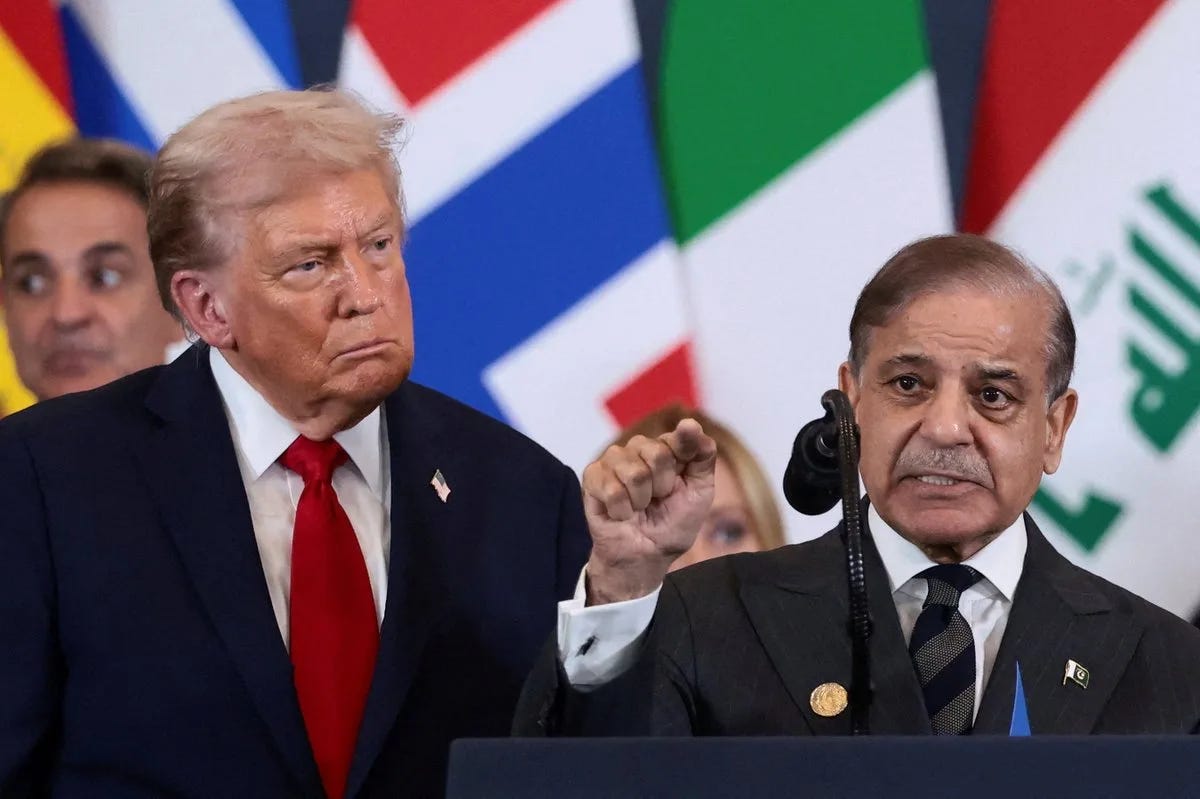
Pakistan’s prime minister, Shehbaz Sharif, confirmed that both sides agreed to an immediate ceasefire not only between Iran and the United States, but also among their respective allies across multiple theaters, including Lebanon and beyond. He added that delegations from both countries are set to meet on April 10 to continue negotiations toward a comprehensive agreement covering all conflict zones.
Regional and International Reactions
The ceasefire has drawn widespread international support, reflecting a growing awareness of the risks posed by continued escalation not only for the parties involved, but also for regional security and global economic stability.
France and Germany welcomed the move, while the office of British Prime Minister Keir Starmer announced plans to travel to the Middle East for talks with Gulf partners to ensure the permanent reopening of the Strait of Hormuz.
In Southeast Asia, Indonesia praised the step, urging all parties to respect sovereignty and pursue diplomacy. Australian Prime Minister Anthony Albanese reaffirmed his country’s commitment to working with international partners to support safe navigation through the strait.
Japan echoed similar sentiments, emphasizing continued diplomatic engagement, while Malaysian Prime Minister Anwar Ibrahim called for a lasting peace, arguing that Iran’s ten-point proposal should evolve into a comprehensive agreement extending beyond Iran to include Iraq, Lebanon, and Yemen.
In the Arab world, Egypt welcomed the ceasefire as a positive step toward de-escalation and safeguarding regional and global stability. Iraq’s Foreign Ministry urged building on this development through sustained dialogue addressing the root causes of conflict.
At the international level, UN Secretary-General António Guterres welcomed the two-week truce, urging all parties to treat it as an opportunity for a longer-term peace in the Middle East, rather than a temporary pause in a volatile crisis.
Lebanon: The Central Fault Line
Lebanon has emerged as the most contentious front in the agreement, exposing early ambiguities regarding its scope and implementation. While Pakistan’s prime minister indicated that the ceasefire includes halting Israeli operations in Lebanon and other arenas, the office of Israeli Prime Minister Benjamin Netanyahu swiftly denied this, asserting that the deal does not extend to Lebanon.
In an apparent effort to align the agreement with Israeli interests, Netanyahu’s office stated that Israel supports Trump’s decision to suspend attacks for two weeks but under specific conditions, foremost among them Iran reopening the Strait of Hormuz and adhering to the ceasefire.
The statement also reaffirmed Israel’s support for U.S. efforts to prevent Iran from acquiring nuclear weapons or becoming a threat through missiles or what it described as “terrorism.”
This stark divergence between the Pakistani narrative and the Israeli position underscores the agreement’s fragility. The absence of a unified interpretation particularly regarding geographic scope and obligations makes Lebanon a likely testing ground for the ceasefire’s resilience.
Domestically, Netanyahu faces pressure not to relinquish leverage in southern Lebanon, a key strategic card both politically and militarily. Early signs suggest potential escalation, even as Lebanon exercises restraint, awaiting clarity on whether it is included in the truce.
With Tehran insisting on the principle of “unity of fronts,” demanding Lebanon’s inclusion in any comprehensive deal, and Netanyahu determined to retain it as leverage, the situation grows increasingly complex. The trajectory remains uncertain ranging from early collapse to renegotiation shaped by shifting power dynamics.
What Are the Challenges?
This agreement cannot yet be considered a final or stable settlement. At its core, it resembles a temporary goodwill initiative rather than a binding framework supported by formal decisions or finalized drafts. As such, it faces a wide array of unresolved political and security challenges.
The first major point of contention lies in how the ceasefire itself is defined. Washington views it as a rapid mechanism to reopen the Strait of Hormuz and stabilize global energy markets, while Tehran seeks to embed it within a broader process leading to a comprehensive and lasting ceasefire. Trump appears to treat it as an immediate test of intentions, whereas Iran sees it as a gateway to a larger deal.
A second challenge concerns the Strait of Hormuz not only its reopening but also its future governance. Tehran reportedly seeks a role in regulating passage and potentially transforming the strait into a revenue-generating economic corridor in partnership with Oman.
However, this vision clashes with existing international legal frameworks, raising questions about whether Washington and global powers would accept such an arrangement.
The agreement also suffers from notable ambiguity on critical issues, particularly Iran’s nuclear program and enrichment activities, as well as the lifting of sanctions and the strategic trade-offs involved. While Trump described the Iranian proposal as a “practical basis,” Washington has yet to articulate a definitive position leaving room for future disputes.
Compounding these challenges is the deep erosion of trust between the two sides. Past experiences have fostered mutual suspicion, with each side wary that the other may use the ceasefire to regroup, buy time, or strengthen its negotiating position. This profound distrust makes implementation far more difficult than mere political agreement.
Perhaps the most sensitive challenge lies in Israel’s stance. Within Israel, voices are growing that view the agreement as a sign of retreat or even political defeat, placing Netanyahu under intense pressure. This could prompt attempts to derail the process whether by continuing operations in Lebanon or targeting Iran directly or indirectly.
Finally, the absence of strong, binding guarantees raises serious concerns about the ceasefire’s durability. While Islamabad supported by parallel efforts from Istanbul and Cairo has helped bridge gaps between Washington and Tehran, Pakistan alone lacks the capacity to guarantee an agreement of this scale and complexity.
It is too early to deliver a definitive assessment of this agreement or treat it as a turning point in the conflict. What has emerged thus far appears to be a necessary pause a moment to catch breath after mounting costs pushed all sides away from the brink.
Yet this ceasefire remains fragile, closer to a tentative gesture of goodwill than a durable settlement. The real challenge lies not only in sustaining the truce, but in transforming it from a military necessity into a lasting political agreement a daunting task amid deep mistrust.
Statements from Iran’s Supreme National Security Council warning that “fingers remain on the trigger, and any mistake by the enemy will be met with full force” alongside continued operations against some Gulf targets, underscore Tehran’s skepticism. For Iran, the ceasefire is merely a test of intentions.
As such, the agreement’s future hangs in the balance between a rare opportunity to contain escalation and the ever-present risk of collapse at the first serious test on the ground.
