

The United States is undergoing a turbulent reckoning on civil rights and liberties, while its foreign policy debates increasingly touch on highly sensitive issues. At the heart of this complex landscape lie Arab and Muslim Americans immigrants and citizens who practice a faith often subject to political scrutiny in Washington, and who hail from regions deeply impacted by U.S. foreign policy.
Although there has been little substantive divergence between the foreign policy agendas of America’s two main political parties, their approaches, principles, and treatment of Muslim Americans differ significantly.
Today, the Muslim population in the U.S. is estimated at 4 to 4.5 million, accounting for about 1% of American adults, according to a 2024 Pew Research Center study. In states with sizable Muslim populations, this demographic holds substantial electoral influence.
The same study shows that 53% of Muslims lean Democratic, while 42% identify with or lean toward the Republican Party. Yet these allegiances are anything but fixed.
What defines Muslim political participation in the United States? Which party garners more support? What shapes the community’s electoral compass? And how did the political landscape shift after October 7? What surprises might the future hold?
From Prohibition to Participation
Historically, Arabs and Muslims in the U.S. showed low levels of political engagement and were largely marginalized until the late 1980s. That decade saw widespread hostility from politicians, including the rejection of Muslim donations as with Walter Mondale in 1984 and public disavowals, like Michael Dukakis in 1988.
This political detachment was driven by multiple factors, notably a closed communal culture that viewed itself as alien to American society. Reinforcing this view were religious rulings from scholars such as former Al-Azhar University president Gad al-Haq, who declared political participation in a secular democracy as a betrayal of Islamic values.
Voices advocating for engagement arguing for the need to influence local realities and protect Muslim interests remained faint. Meanwhile, the overwhelming financial and political dominance of pro-Israel forces in U.S. politics deepened Muslim disenchantment.
A 1988 report estimated that pro-Israel groups outspent Muslim organizations by a factor of 145 to 1. The pattern repeated in 1992, with $6 million spent by Zionist organizations compared to just $40,000 from Muslim groups.
A turning point came in the 1996 election cycle, when wealthy Muslim donors began contributing to campaigns, and Islamic organizations started raising political awareness. Yet internal divisions persisted. Immigrant Muslims, often culturally conservative, leaned Republican, while Black American Muslims, rooted in marginalized communities, tended toward the Democrats a split that diluted collective political power.
Republicans: A Brief Alignment
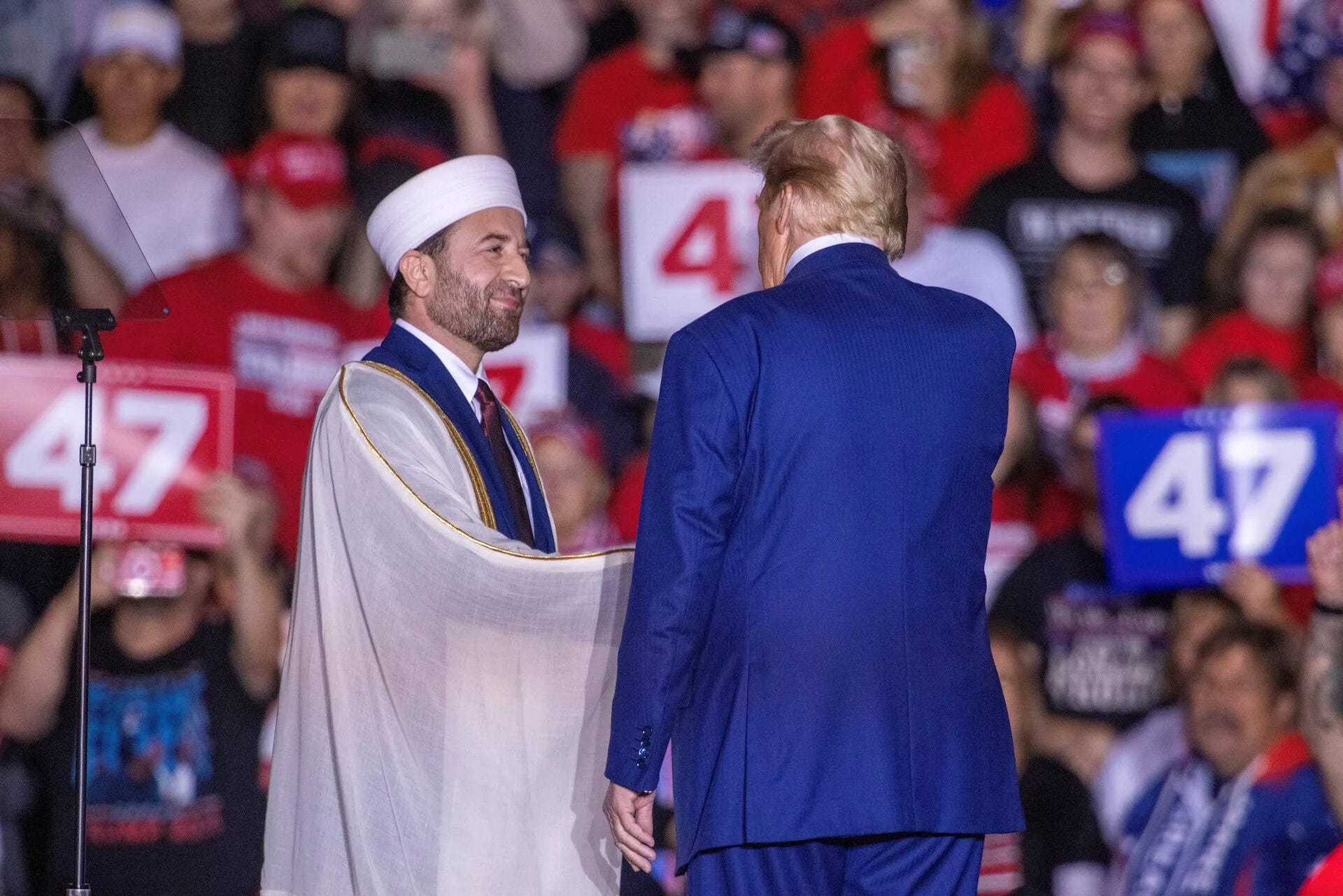
As the Muslim American population grew in the early 2000s, its political potential caught national attention. George W. Bush became the first presidential candidate to seriously court Muslim voters in Michigan, home to the nation’s largest Muslim community. He identified with their conservative values and cautious economic outlook, securing 72% of Muslim votes in the state despite losing Michigan overall in 2000.
Bush and Vice President Dick Cheney’s early stance on Palestine also influenced Muslim support. After the collapse of Bill Clinton’s peace efforts and rising frustration with perceived Democratic capitulation to Israel, Bush’s mention of a two-state solution kindled hope among Arab and Muslim voters.
However, this fragile alliance crumbled quickly. Following Bush’s inauguration, the September 11 attacks occurred, prompting a sweeping “War on Terror” that disproportionately targeted Arab and Muslim communities, both domestically and abroad. Despite official reassurances, these communities became scapegoats.
Until 2000, many Muslims voted Republican for cultural and religious affinity. But 9/11, and the invasions of Iraq and Afghanistan, along with a surge of Islamophobia, marked a critical shift. The resulting backlash included arbitrary detentions, surveillance of mosques, and revelations of torture at Abu Ghraib and Guantanamo Bay, misleadingly dubbed “enhanced interrogation techniques.”
The Republican Party played a central role in fomenting anti-Muslim sentiment, often via right-wing populist narratives during election cycles. Consequently, Muslim voters began a two-decade migration toward the Democratic Party. In 2004, 85% voted for John Kerry; by 2008, 90% supported Barack Obama.
A Pew study from 2007 to 2017 showed this evolution: in 2007, 66% of Muslims favored Democrats versus 13% for Republicans. Support for Democrats peaked at 70% under Obama and remained above 60% in 2017, even as Hillary Clinton ran against Donald Trump. The Democrats maintained a dominant edge.
Fleeing Populist Flames
Donald Trump’s populist presidency catalyzed record voter turnout in 2020. Nationwide, 66.8% of registered voters cast ballots a 7% increase from 2016. Muslim turnout reached historic levels: 71% of 1.5 million registered Muslim voters participated.
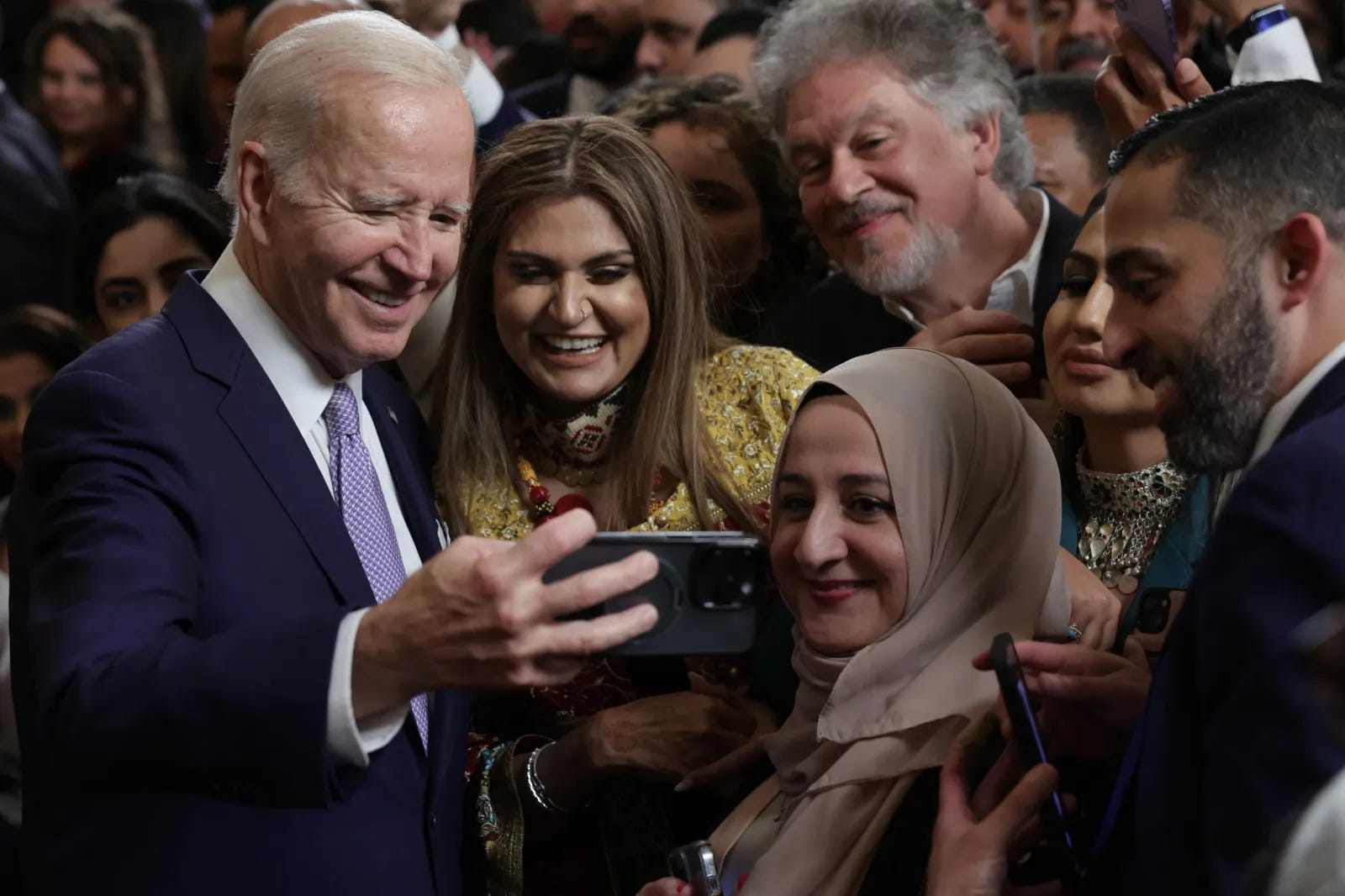
This mobilization was a direct response to Trump’s discriminatory policies, including the Muslim Ban and the targeting of Islamic institutions. His unequivocal support for Israel moving the U.S. embassy to Jerusalem, promoting the Abraham Accords, and unveiling the “Deal of the Century” fueled further outrage.
An election-day survey by the Institute for Social Policy and Understanding found 86% of non-Arab Muslims and 81% of Arab Muslims voted for Joe Biden. While Trump’s Islamophobia was a central factor, domestic issues such as healthcare, taxes, and the economy also shaped voter behavior underscoring Muslim Americans’ deepening engagement with broader American concerns.
What Do Muslim Voters Want?
The Muslim American community is among the most diverse in the U.S., encompassing Arabs, Blacks, Latinos, Asians, and Whites. Consequently, political leanings vary widely across cultural and socio-economic lines.
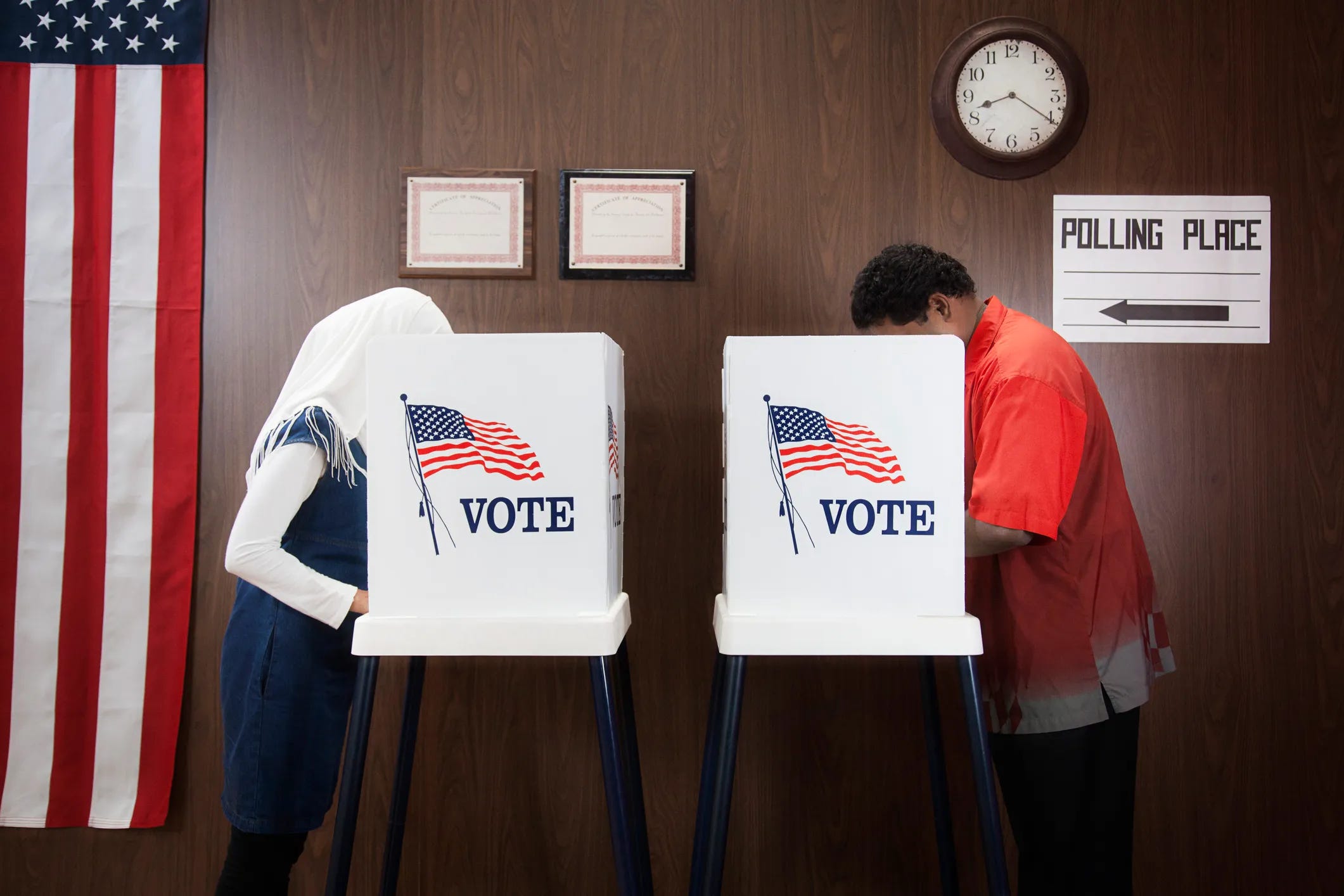
Generally, Muslims support Democratic stances on immigration, diversity, and social services. According to Pew’s 2023-2024 data, 71% favor a larger government, 82% support racial and ethnic diversity, and 82% back pro-immigration policies.
Yet, they align with Republicans on family values, gender roles, and opposition to LGBTQ+ ideology. For instance, 63% believe one parent should stay home to raise children, 55% view homosexuality as socially problematic, and 48% say gender transition has negatively impacted society.
Muslims also diverge from both parties on religion in public life. Some 55% believe public school teachers should lead students in prayer a position neither party fully endorses.
In 2020, 37% of Muslim voters identified as moderate, compared to 26% progressive, 18% liberal, and only 10% conservative. This reflects a reluctance to fully align with either political ideology.
Thus, Muslim electoral behavior reflects a complex balance of domestic concerns and foreign policy stances, especially those affecting their countries of origin. U.S. policy toward the Middle East remains a key influence, with Muslims generally favoring Democrats for their diplomacy-first approach and aversion to military intervention.
Generational divides also play a role. Older immigrants often hold conservative views shaped by Islamic and Eastern traditions, while younger generations raised in the U.S. adopt more progressive stances, including support for LGBTQ+ rights, abortion access, and secular economic policies aligning more with Democratic ideals.
Soren Jordan, a political science professor at Auburn University, notes that Muslim voting patterns are shaped by the same factors influencing the broader electorate: economic realities, political climate, and the desire for change. As CAIR’s Robert McCaw puts it, Muslims are neither fully left nor entirely right. No party can assume their unconditional support.
Gaza Genocide: A Turning Point
Israel’s war in Gaza was a watershed moment for Muslim and Arab voters. President Biden’s unwavering support for Israel, refusal to back a ceasefire, and obstruction of UN efforts alienated these communities. In key swing states like Michigan, Muslims began abandoning Democrats for Republicans or third-party candidates.
Disillusioned voters split across multiple strategies: some backed Kamala Harris as the “lesser evil” hoping for a shift in Democratic policy, others cast protest votes for Trump based on his promise to end the war, and many supported Green Party candidate Jill Stein, despite her slim chances, to send a message. Others boycotted the election altogether.
In CAIR’s preliminary 2024 survey, less than half of Muslims voted for Harris, down from 65–70% for Biden in 2020. An Associated Press poll found 63% supported Harris.
In Michigan, home to 200,000 Muslim voters and 15 electoral votes, Trump won by 84,000 votes suggesting Muslim turnout played a decisive role.
For the first time, significant numbers of Muslims voted for a third-party candidate. Yet some, wary of repeating 2016, when Muslim votes for Stein allegedly cost Hillary Clinton key states, opted for Harris.
Arab American Institute President James Zogby noted a dramatic shift: 42% of Arabs voted for Trump and 41% for Harris, an unusually tight margin for a group that historically favors Democrats.
While Gaza was pivotal, other domestic issues economic anxiety, education, LGBTQ+ rights also influenced decisions. Notably, many Muslims oppose open-border policies and large-scale support for undocumented migrants, aligning them partially with Republican immigration stances.
Republican support among Muslims has been rising. In the 2022 midterms, 28% of Muslims voted Republican, up from 11% in 2018. This reflects growing dissatisfaction with Democratic pandemic policies and economic fallout.
A New Era
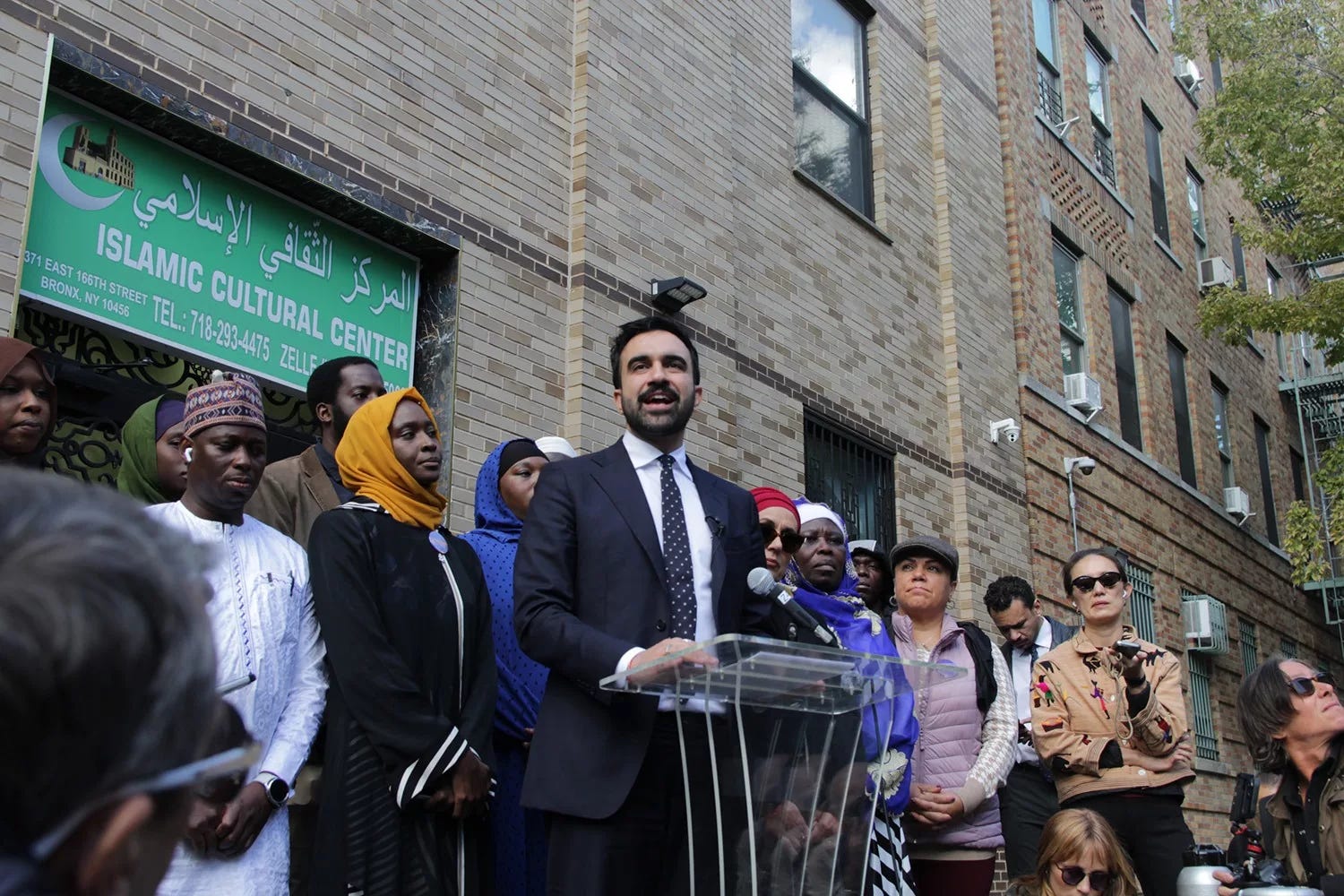
Muslim political engagement has surged not only in voting but also in running for office. As of 2022, 83 Muslims held elected positions, mostly as Democrats, with the number rising. All four Muslim members of Congress are Democrats.
Still, some Muslims have made inroads in Republican circles. Mehmet Oz ran for Senate in Pennsylvania and, though he lost, was recently appointed by Trump to a top federal healthcare role. Meanwhile, Dearborn Mayor Abdullah Hammoud, a Democrat, endorsed Trump, highlighting the fluidity of political loyalties.
Muslim voters don’t adhere strictly to party lines. Their support is shaped by context, candidate credentials, and policy agendas. In this evolving landscape, no party can take their votes for granted.
