

The latest Israeli war on Gaza has left behind an entire generation of orphans more than 50,000 children, many of whom lost their entire families in an instant. As calls intensify for sustainable solutions for their future, the community grapples with the challenges of adoption, which is largely prohibited under local customs and laws, leaving care institutions as the only refuge for these children.
Against this grim humanitarian backdrop, a deeper question lingers: how can a future be built for children who are left with nothing but memories? Who will carry the burden of life for those who have lost their only support?
Embracing Jana
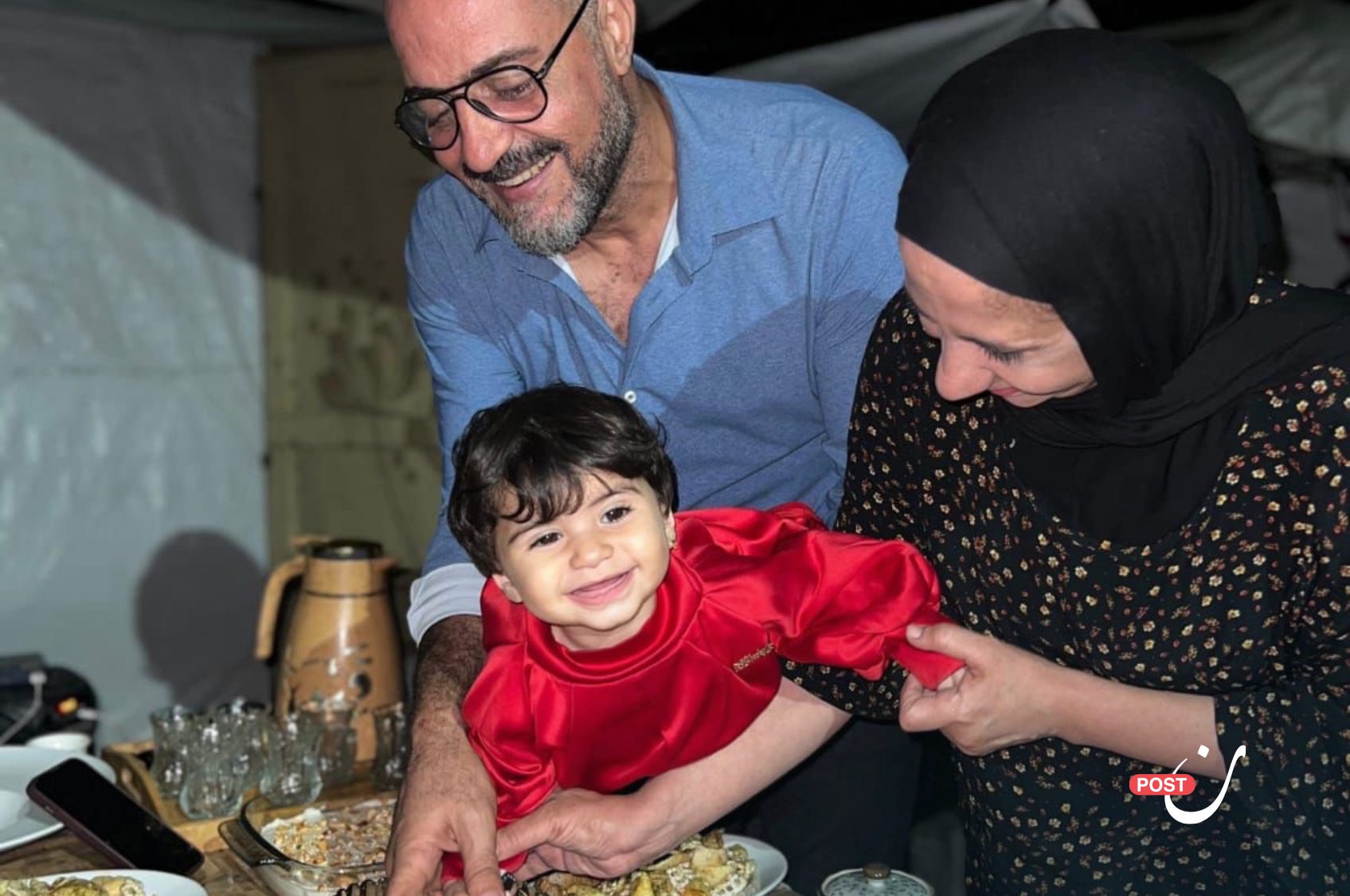
In their modest home, Rami Al-Arouqi and his wife Iman Farhat cradle baby Jana, who entered their lives at one of Gaza’s darkest moments. After two decades of childlessness, the couple saw the war’s devastation and the thousands of orphaned children as a moral call rather than a personal choice.
“With the daily rise in the number of martyrs, I couldn’t bear seeing surviving children left alone,” Rami told Noon Post. “As a human being and a Palestinian, I felt it was my duty to open my home to a child who had lost her family.

We never had children, but for the first time, I saw a chance to offer a new life to someone who needed a warm embrace.”
The journey to find an orphaned child wasn’t easy. Rami visited hospitals and shelters housing surviving children. During one visit to the American Hospital in Deir al-Balah, doctors told him about a baby girl identity unknown who was pulled from the rubble after her entire family was killed.
Though Jana is now an inseparable part of their family, Rami still searches for any clue that might lead to her past or surviving relatives. “I want to know her story,” he says, visibly emotional. “Gaza doesn’t forget its children. There might be a relative out there looking for her. But if no one comes forward, I will be her father, mother, and protector.”
For Rami and Iman, taking Jana in wasn’t about filling a void. It was a human response to a collective tragedy. Jana brought new life into their home, carrying with her a broader message: in Gaza, love still triumphs over war.
Raising 36 Grandchildren
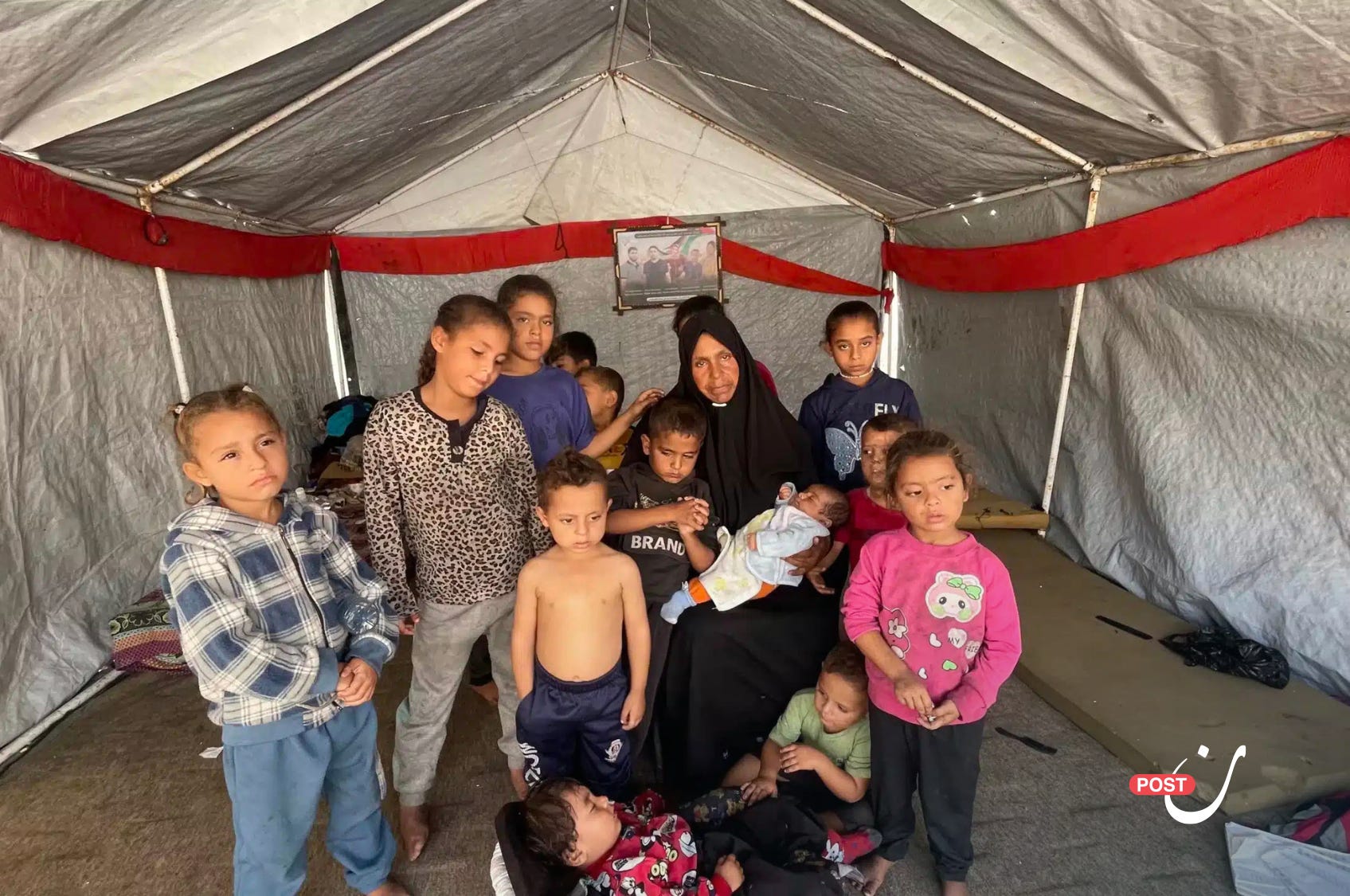
In a battered alley in eastern Gaza’s devastated Shujaiya neighborhood, a tattered tent stands against the winter winds. For Um Mohammed Alaiwa, it’s all that remains of home.
The 60-year-old lost five sons to the war and now finds herself responsible for 36 children her grandchildren and relatives’ children all orphaned and in desperate need of care and protection.
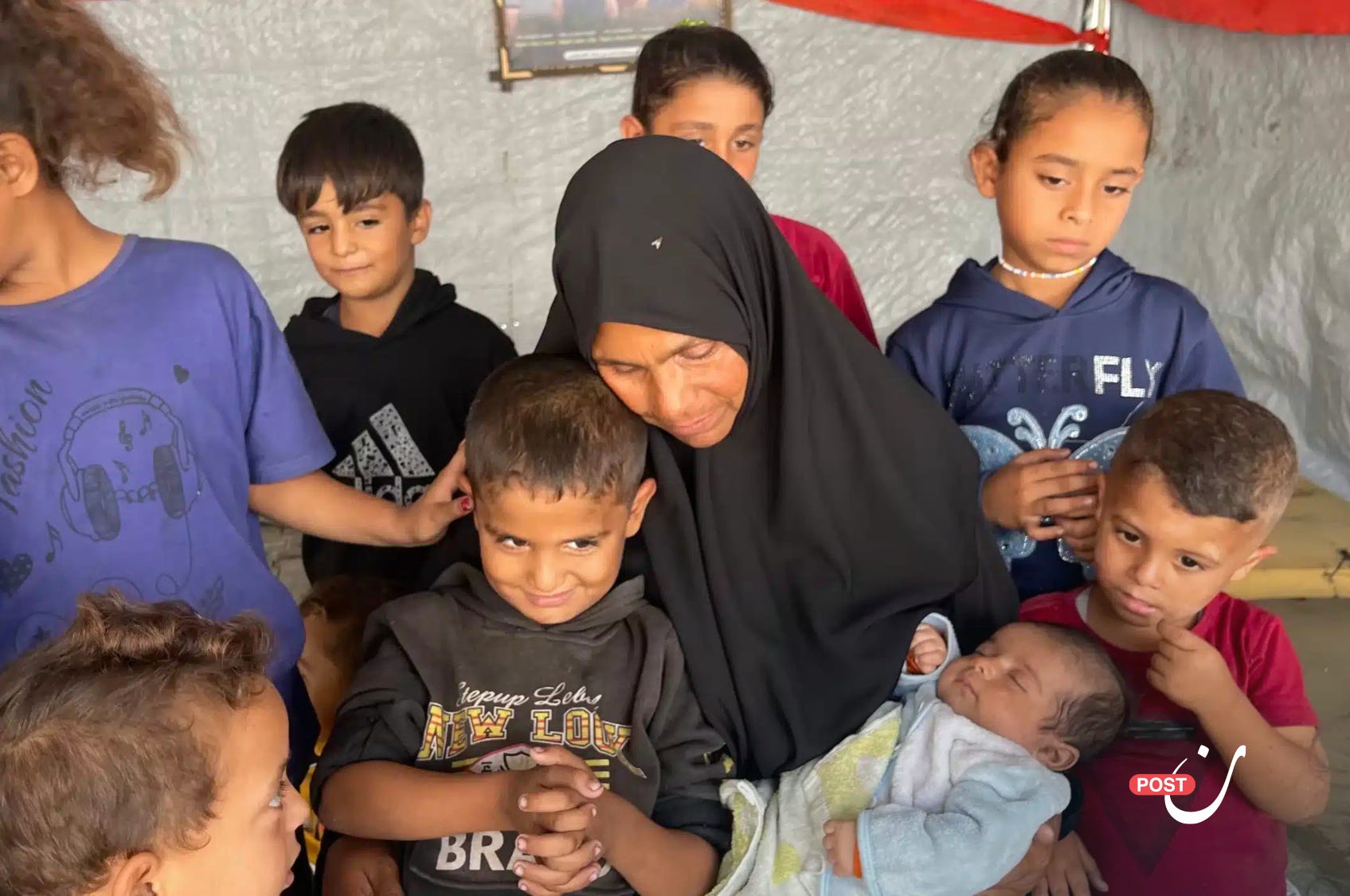
“The pain never leaves my heart,” Um Mohammed told Noon Post in a weary voice. “But when I see the children around me, I feel I must stay strong. I’m their last support. Each one of them has a story. Each one needs a mother’s hug. I try to be that for them.”
Despite losing her home and all her possessions, Um Mohammed refuses to give in. Every morning, she rises to collect firewood from the rubble, starts a fire, and bakes what little she can for the children. “We cook on open flames and search for anything to shield them from the cold,” she says. “Maybe it’s not much, but they are a trust I must protect.”
She and her husband live in conditions barely resembling life no home, no bedding, no warm clothes, and barely enough food. Still, they shoulder the burden of a small army of orphans who need everything. “We can’t provide proper shelter, good food, or medical care,” she says, her voice trembling.
“But I can’t abandon them. They are the scent of my martyred sons, and I promise them every day that I will stand tall.”
A terrifying question haunts her: “If I die, who will care for them? Who will hold their hands?” Her voice drops. “My health is failing, and I fear for them more than I fear for myself. I beg God to extend my life just for them.”
Despite poverty, illness, and despair, Um Mohammed stands as a powerful symbol of the resilience of Gaza’s women last lines of defense for entire families. In her tiny tent, pain is constant, but it is woven with boundless tenderness and a strength that seems greater than the war itself.
A Historic Surge in Orphan Numbers
Nidal Jarada, director general of Al-Amal Institute for Orphans in Gaza, revealed that the number of orphans in the Gaza Strip has reached unprecedented levels since the war began. Health institution statistics indicate that more than 50,000 children have been orphaned, with 34,000 now officially registered with the institute, in addition to around 14,000 who were registered before the war.
Jarada also noted a category known as “legal orphans” children whose fathers are missing but not confirmed dead. “Some may be prisoners or disappeared,” he told Noon Post. “We don’t include them in our official records, but their number approaches 10,000.”
Regarding adoption, Jarada emphasized that Al-Amal does not facilitate adoptions, explaining that “the vast majority of orphans have extended families.” As for newborns found after massacres without known relatives, he clarified that “they are not truly of unknown lineage, but their families’ fates remain uncertain due to deaths or disappearances.”
The institute places strong emphasis on psychological support, aiming to help children reintegrate into as normal a life as possible. This includes therapy, school and social activities, and various forms of rehabilitation.
Reflecting on the institute’s roots, Jarada said: “Al-Amal was founded in 1949 in response to the crimes and forced displacement caused by Israeli occupation. Seventy-six years later, the same crimes continue especially since 2023 so the institute continues its historic role of caring for children who lost their parents in this ongoing aggression.”
He described Al-Amal as “the oldest institution providing shelter and care for orphans in Palestine,” serving children from across Gaza, from Beit Hanoun to Rafah. Services include full housing, mental health support, internal schooling, vocational training, and economic empowerment programs for widowed mothers to help them earn a sustainable income.
The institute also offers monthly sponsorships, food and hygiene packages, and fresh produce distributions during wartime.
Jarada added that the institute is currently distributing winter relief kits to orphaned families, aiming to reach 33,000 children in the current phase.
