

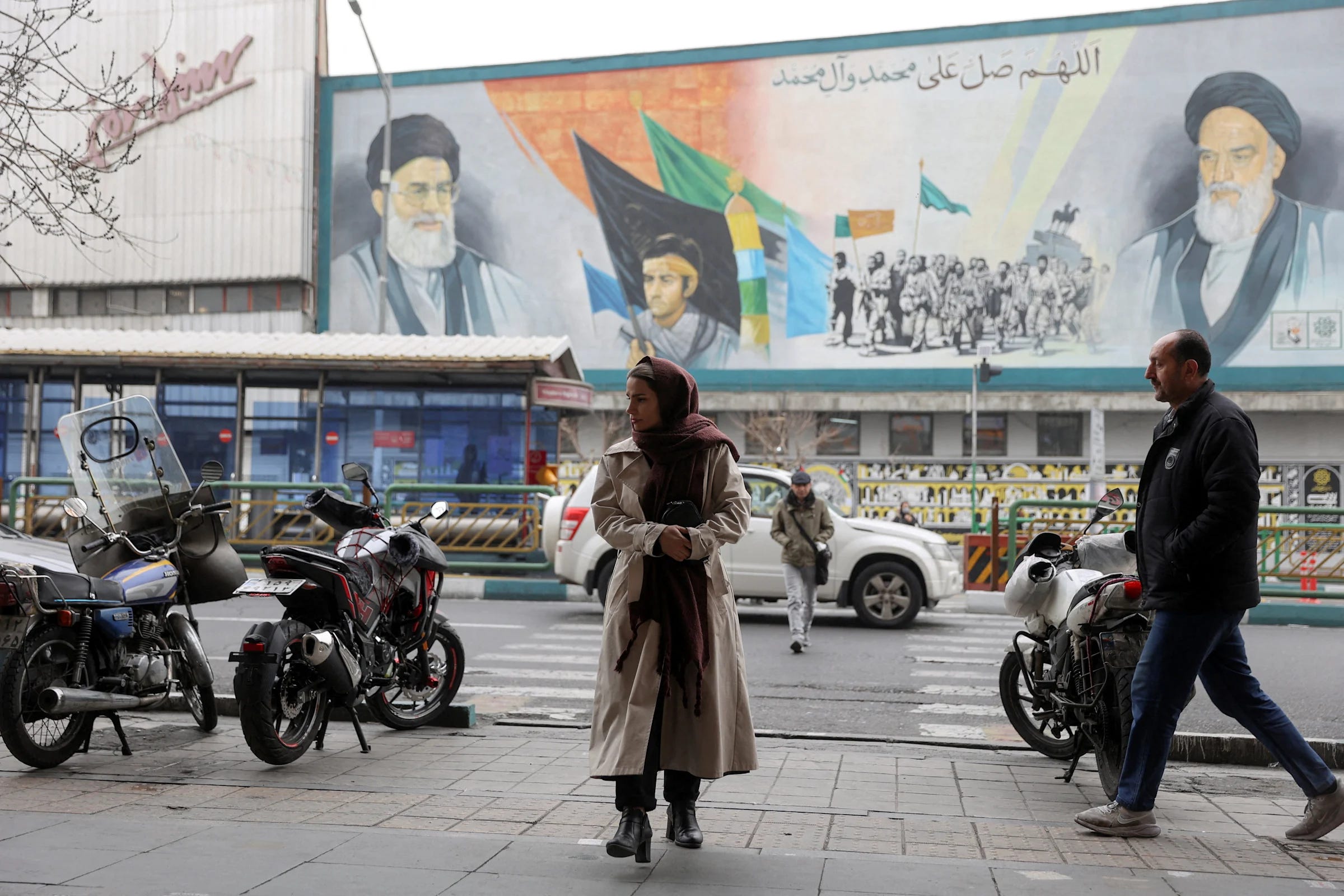
Amid the absence of a clear American vision, a fundamental question is emerging: who would lead Iran if the Islamic Republic collapses especially after the death of Supreme Leader Ali Khamenei during the U.S.–Israeli war that began on February 28, 2026?
Western sources indicate that Washington has not presented a comprehensive vision for “the day after.” President Donald Trump acknowledged that most of the opposition figures his administration had considered are no longer in the picture.
What Is Washington’s Vision?
In early March 2026, Trump said that “someone from within the regime” might be the best option to lead Iran after the war, noting that “most of the people the administration had been thinking about have been killed.” He also indicated that he is not interested in backing exile figures such as Reza Pahlavi.
Trump explained that any alternative leadership should have genuine popularity inside Iran and stressed that his administration wants to avoid a “worse scenario,” namely the emergence of another authoritarian ruler. In other remarks, he said the strikes had “emptied the political landscape,” adding that he could not name anyone capable of governing Iran after the regime’s collapse.
Members of the U.S. Senate from both parties have questioned the administration about the day after. A Reuters report quoted senators such as Chris Murphy and Chris Coons as saying Trump appears to be counting on a popular uprising, but that no clear plan exists regarding who would lead Iran.
Other lawmakers confirmed that the administration has not presented a post-strikes strategy and that they do not see a single opposition figure capable of uniting Iranians.
U.S. intelligence reports cited by Reuters suggest that even after the assassination of Supreme Leader Ali Khamenei, commanders of the Islamic Revolutionary Guard Corps or hardline clerics could fill the vacuum.
Former officials say the opposition abroad is small, fragmented, and lacks a domestic base. The regime’s survival largely depends on the support of the security apparatus meaning that changing it through military pressure alone is unlikely.
Analyses by the Atlantic Council and Radio Free Europe indicate that Washington’s strategy focuses on creating space for Iranians to determine their own future, but that there is little appetite for direct regime change.
Observers also argue that the opposition in exile remains deeply divided and burdened by longstanding internal disputes, and that Washington’s previous reliance on external opposition groups in the region has not produced successful outcomes.
Taken together, criticism from American officials and admissions that no clear plan exists reflect a growing recognition that any transition to a new political system will require a domestic leadership with genuine legitimacy and public acceptance.
Key Opposition and Critical Figures Inside Iran
1. Mir-Hossein Mousavi
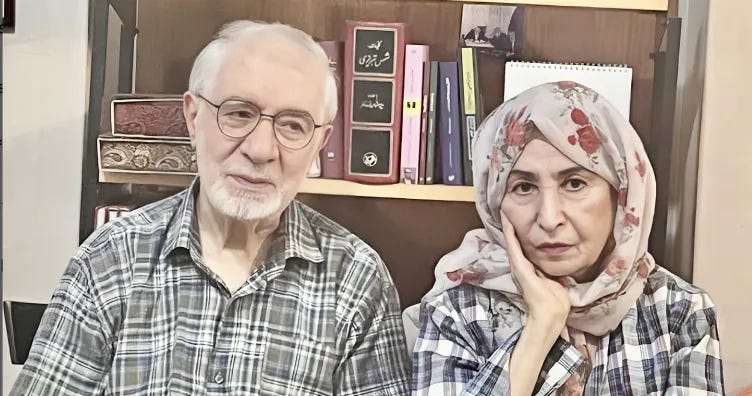
Iran’s prime minister during the 1980s and one of the leaders of the Green Movement in 2009. Since 2011, he has been under house arrest along with his wife Zahra Rahnavard. In February 2026, he called for a “national salvation front” for Iran and a new constitution, arguing that the current system has lost its legitimacy.
2. Zahra Rahnavard
An academic, artist, and women’s rights activist and Mousavi’s wife. She has also been under house arrest since 2011. Rahnavard is regarded as a symbol of feminist opposition inside Iran due to her outspoken support for protest demands, despite being barred from public appearances.
3. Mehdi Karroubi
A former speaker of parliament and prominent reformist candidate. He was placed under house arrest in 2011 after calling for demonstrations. The travel ban imposed on him was lifted in March 2025, and he has demanded the same decision be applied to Mousavi and Rahnavard. However, his influence remains limited due to ongoing security restrictions.
4. Mostafa Tajzadeh
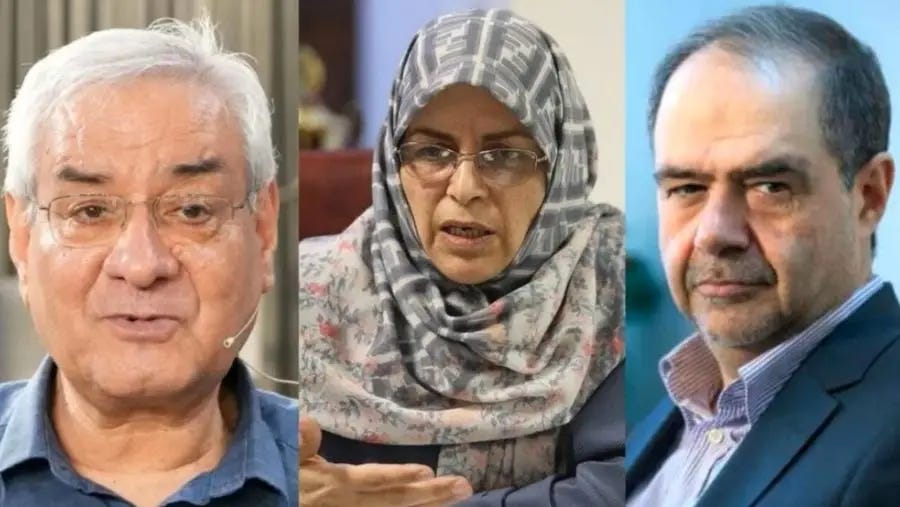
A former deputy interior minister and one of the leading figures in Iran’s reformist movement. He has been arrested multiple times and is currently imprisoned in Evin Prison. In leaked letters, he said the January 2026 massacre the violent suppression of protests was predictable. He called for national dialogue and the formation of an independent investigative committee, warning that war would deepen Iran’s wounds.
5. Narges Mohammadi
A human rights activist and the 2023 Nobel Peace Prize laureate. She has been jailed several times for campaigning against the death penalty and advocating women’s rights. In February 2026 she received an additional seven-and-a-half-year prison sentence. At the time she was on hunger strike and being held in a detention center in Mashhad. Despite imprisonment, she continues to send messages criticizing the regime.
6. Nasrin Sotoudeh
A prominent human rights lawyer who received medical leave from a 38-year prison sentence but later faced three new cases that added eight more years to her term. She has been barred from practicing law and her family has been banned from traveling. In an interview with The Guardian, she described the harsh conditions of Qarchak Prison and her campaigns supporting girls who refused to wear the mandatory hijab.
7. Molavi Abdolhamid
One of the most prominent Sunni clerics in the city of Zahedan, known for criticizing discrimination against minorities by the Iranian state. After the “Bloody Friday” massacre in Zahedan during which dozens were killed in clashes with the Revolutionary Guard he called for an independent investigation and criticized the judiciary for lacking independence.
8. Mehdi Mahmoudian
A civil activist and journalist previously convicted for exposing torture of detainees. In February 2025 he surrendered to serve an eight-month prison sentence over social media posts about bedbug infestations in prisons. Earlier he had served 30 months after being convicted over civil activism.
9. Azar Mansouri
Secretary-general of the Reform Front, the largest reformist coalition. She was arrested in February 2026 along with colleagues and accused of “undermining national unity” before being released on bail. Her return to political activity remains subject to security monitoring.
10. Ebrahim Asgharzadeh
A reformist activist and former member of parliament, known for leading student activists during the 1979 takeover of the U.S. Embassy. He was arrested along with fellow members of the Reform Front and later released on bail. He advocates political reform and limiting the influence of the Revolutionary Guard.
11. Mohsen Aminzadeh
Former deputy foreign minister during the presidency of Mohammad Khatami and a senior member of the Reform Front leadership. He was arrested in February 2026 alongside Mansouri and Asgharzadeh, with no reports of his release. Media reports describe him as one of Iran’s most prominent reformist diplomats.
12. Javad Emam
Spokesman for the Reform Front. Arrested in February 2026 along with other leaders and later released on bail. He is known for criticizing the regime’s policies and advocating for free elections.
13. Abdollah Momeni
A prominent human rights activist associated with the student movement. A report by the Atlantic Council said he was arrested on January 31, 2026 alongside journalist Mehdi Mahmoudian and activist Vida Rabbani before later being released on bail. He has advocated free elections and a civil state.
14. Vida Rabbani
An independent journalist and feminist activist. Arrested with Momeni and Mahmoudian and later released. She is known for covering protests and advocating women’s rights.
Prominent Iranian Opposition Figures Abroad
1. Reza Pahlavi
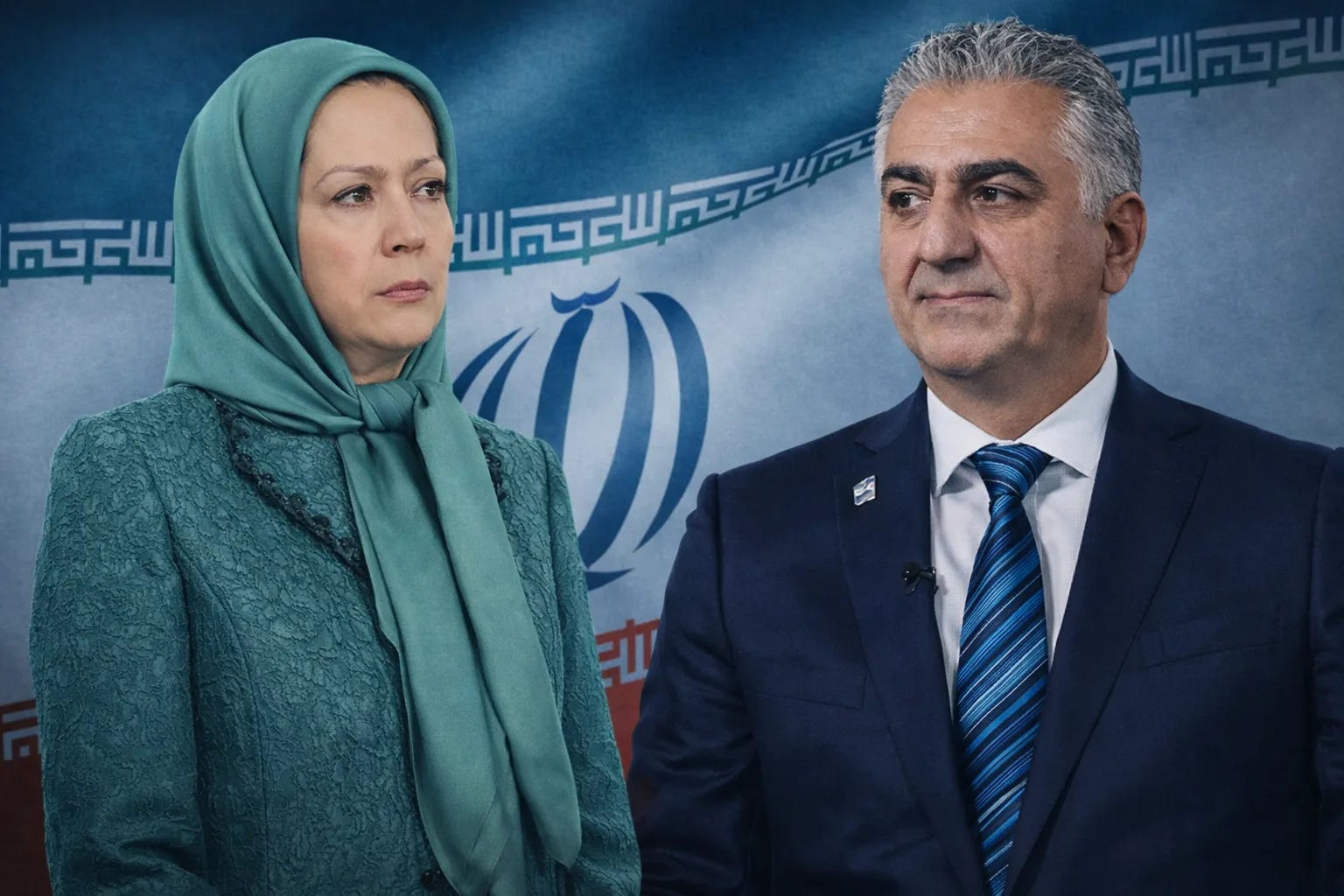
The son of Iran’s last shah and the former crown prince. Living in the United States since 1979, he leads an opposition movement calling for a secular democratic system. He has expressed readiness to lead a transitional phase and visited Israel seeking support, though reports suggest the extent of his backing inside Iran is difficult to measure. In February 2026, he claimed that U.S. military intervention “could save lives,” urging Washington to act quickly.
2. Maryam Rajavi
President of the National Council of Resistance of Iran and leader of the Mujahedin-e Khalq Organization (MEK). She resides in Albania with the group’s leadership and advocates the overthrow of the Islamic Republic and the establishment of a “democratic republic.” The organization enjoys a network of supporters in Europe and the United States but faces criticism due to its militant past and former ties to Saddam Hussein’s regime.
3. Masih Alinejad
An Iranian journalist and activist based in the United States who leads social media campaigns such as the “My Stealthy Freedom” movement encouraging Iranian women to remove what she calls the “compulsory hijab.” She has faced kidnapping and assassination plots linked to Iranian security services, making her a prominent opposition symbol.
4. Nazanin Boniadi
A British-Iranian actress and human rights activist who uses her platform to advocate for political prisoners and women’s rights in Iran. She previously served as an ambassador for Amnesty International.
5. Hamed Esmaeilion
A writer and dentist living in Canada who lost his wife and daughter when Ukraine International Airlines Flight PS752 was shot down in January 2020 shortly after taking off from Tehran. Since then he has led the association of victims’ families, calling for justice and accountability. The tragedy occurred amid rising tensions between the United States and Iran, and Tehran later acknowledged the plane had been downed by human error.
6. Shirin Ebadi
A human rights lawyer and the 2003 Nobel Peace Prize laureate. She has lived in exile in the United Kingdom since 2009 after being targeted along with her family. Ebadi works with international rights organizations to defend women’s rights and political prisoners.
7. Abdullah Mohtadi
Secretary-general of the Komala Party of Iranian Kurdistan. Living in Iraqi Kurdistan, he advocates Kurdish federal autonomy and the overthrow of the Islamic Republic. He participates in alliances with other opposition groups, though his influence remains largely confined to Kurdish regions.
8. Ali Karimi
A former football star and national sports icon. Living in either the United Arab Emirates or Germany, he has spoken publicly in support of protests preceding the war. Leveraging his popularity, he communicates with Iranians in Persian and Arabic, becoming a symbolic figure for protesters.
9. Golshifteh Farahani
An Iranian actress and musician living in France. After appearing in Western films, she became a symbol of exiled artists and has used her global fame to highlight what she describes as repression of women and artists in Iran.