

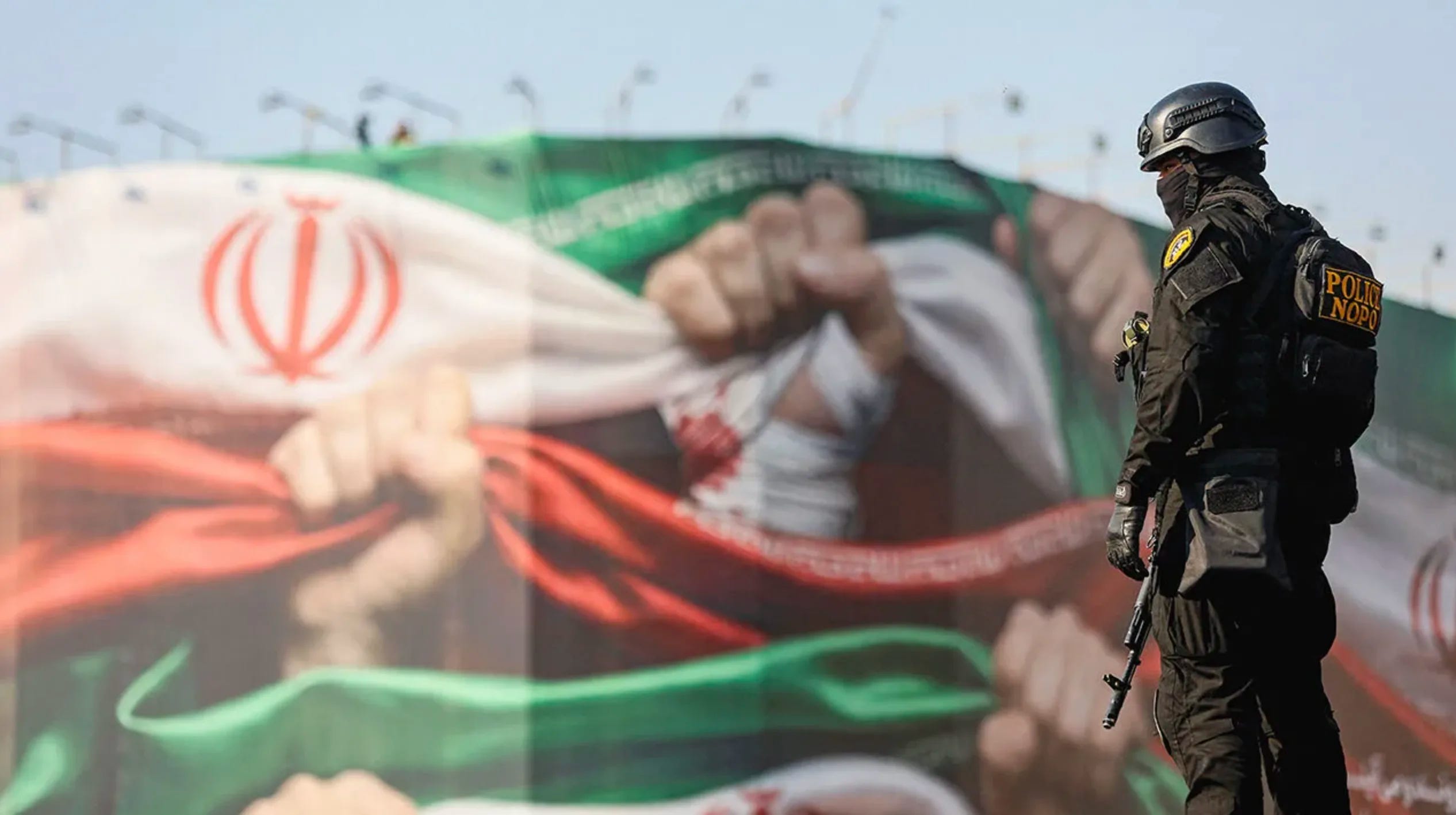
What began in Iran as a bazaar merchants’ strike amid the sharp collapse of the national currency quickly ignited broader protests over the country’s worsening economic conditions.
These protests erupted just as Iran emerged from a war that, at its core, aimed to shake the foundations of the regime’s security and military apparatus, particularly targeting its nuclear ambitions and missile manufacturing capabilities.
These unprecedentedly scrutinized demonstrations have reopened debates over the future of a regime that, for decades, has stood as both a pillar of regional balance and a source of volatility. Iran has long been a regional power impossible to ignore sometimes fueling tension, sometimes easing it depending on the shifting dynamics of influence, interests, and rival alliances that have defined the Middle East for generations.
These developments are unfolding at a moment of extreme regional sensitivity. The Middle East is entering a new phase of uncertainty, marked by an Israeli military offensive increasingly operating beyond any legal or political restraints, and a U.S. administration that has cast aside conventional foreign policy norms in its pursuit of a redefined global order even going so far as to abduct the president of a sovereign nation in an unprecedented diplomatic breach.
Against this backdrop, questions have intensified regarding the survival of Iran’s post-1979 Islamic Republic. The growing American push toward a military strike framed as a strategic ‘earthquake’ aimed at destabilizing the regime intersects with similar Israeli ambitions.
This alignment has triggered deep anxiety among regional powers, fearful that any miscalculated action could unleash sweeping geopolitical and security aftershocks from which no capital in the region would be immune.
Serious Moves Toward Regime Change
While protests in Iran are not new the country has weathered repeated waves of unrest they have not previously led to serious discussions of regime change. From the Green Movement in 2009, to the deadly protests of 2019, and the 2022 “Woman, Life, Freedom” uprising, the regime has managed to contain unrest despite its steep political and security costs.
What sets the current protests apart is not only their scale but also their timing, amid unprecedented foreign political and military escalation. The domestic unrest coincides with continued Israeli pressure to launch a new strike on Iran aimed at halting its ballistic missile program and rebuilding damaged nuclear facilities following the recent Twelve-Day War.
This threat has moved beyond Israel, garnering explicit support from U.S. President Donald Trump, whose joint statements with Israeli Prime Minister Benjamin Netanyahu echoed a shared will to act.
This volatile climate was amplified by a watershed event days before the protests peaked: the U.S. operation to capture Venezuelan President Nicolás Maduro and transport him to the United States. The move, a blatant breach of sovereignty and diplomatic norms, marked a turning point in American interventionism, reinforcing a belief within Washington that it can unilaterally impose new political and security realities by force.
Within this context, for the first time, American discourse has combined support for Iranian protesters with direct threats to Tehran. Trump warned of strikes on Iran’s nuclear and missile infrastructure if it threatens regional or global stability. His rhetoric shifted from deterrence to open advocacy for regime change, stating in a Politico interview: “It’s time to look for new leadership in Iran.”
Citing U.S. officials, The Wall Street Journal reported that Trump is pushing for ‘decisive’ military options against Iran while simultaneously deploying reinforcements to the region signaling a shift from traditional deterrence to active planning for regime overthrow.
Israel has echoed this shift. Netanyahu expressed hope for “the Persian people’s liberation from tyranny,” while Israeli Foreign Minister Gideon Sa’ar declared support for “the Iranian people’s struggle for freedom,” framing the issue as one with the regime, not its citizens.
Unlike Israel’s historically hostile stance, the more profound shift lies in Washington’s willingness to pair rhetoric with military planning bringing regime change out of the realm of speculation and placing it squarely on the international decision-making agenda, with all the risks that entails.
Unprecedented Regional Sensitivity
In contrast, regional powers have reacted with pronounced caution. Far from adopting a policy of neutrality, Gulf states and Turkey have grown increasingly alert to both the internal unrest in Iran and the rising threat of American military escalation.
Turkey has adopted a cautious, balanced tone. Foreign Minister Hakan Fidan acknowledged the legitimacy of the protesters’ grievances, calling them “real and structural,” while warning that “Iran’s external adversaries are manipulating them.”
He reiterated Turkey’s interest in a cooperative path with Tehran and emphasized that regional stability hinges on such a course. Reuters quoted Fidan saying that Ankara would not tolerate the use of violence against Iran.
Similarly, the Turkish ruling party’s spokesperson, Ömer Çelik, warned against chaos in Iran, even as he recognized legitimate domestic issues. He stressed that these issues, as Iranian President Masoud Pezeshkian suggested, must be addressed internally.
Çelik warned against foreign interference, particularly from Israel, cautioning that such meddling could spark broader crises.
What is more striking, however, is the hardened stance adopted by Gulf states—one that goes beyond past tensions with Tehran. According to Western media reports, Gulf countries played a key role in delaying a near-certain U.S. military strike, with their opposition becoming a decisive factor.
The Wall Street Journal reported that Saudi Arabia is leading a Gulf front, including Qatar and Oman, to dissuade Washington from attacking Iran. These countries warned that such a move could destabilize global oil markets and ultimately harm the U.S. economy.
Saudi officials reportedly told Tehran they intend to distance themselves from any conflict and will not permit the use of their airspace for American strikes a clear effort to avoid entanglement. The Gulf states, according to the report, have warned Washington that regime change in Iran would risk unleashing uncontrollable chaos.
A senior Saudi official stated that regional stability remains Crown Prince Mohammed bin Salman’s top priority.
Qatari Prime Minister and Foreign Minister Mohammed bin Abdulrahman Al Thani echoed this sentiment at the Davos Forum, stating that the region is in a highly tense phase and that Doha opposes further escalation. He urged the U.S. to return to diplomatic engagement with Iran over its nuclear program.
Although other Gulf states have remained publicly silent, all indicators suggest they share the concern that a U.S. strike could trigger a collapse of Iran’s institutions with no clear post-regime vision raising the specter of widespread instability.
A Geopolitical Earthquake in the Region
The fall of the Iranian regime would constitute a seismic shift comparable in magnitude to the 1979 revolution itself, which ended Iran’s alliance with the U.S. and transformed it into a revolutionary force opposing Western hegemony in the Middle East.
That transformation redrew the region’s political and security map, spawning new alliances, proxy wars, and asymmetric conflicts. Iran’s “export of revolution” strategy fostered political-military networks across several Arab states, enabling Tehran to wield direct or decisive influence over the policymaking of multiple capitals.
Should the regime now collapse especially violently or without preparation it is unlikely to create a manageable power vacuum. Instead, it could unleash a complex web of security, ethnic, and sectarian crises. Risks include the disintegration of central authority, arms proliferation, and the leakage of sensitive materials including enriched uranium to non-state actors, echoing the chaotic collapses of Iraq and Libya, but on a far more dangerous scale given Iran’s strategic location and military capacity.
Regionally, the fallout would be immediate and multifaceted. Turkey would view any Kurdish movement inside Iran as a direct threat to its national security, fearing spillover effects across its southeastern border.
In the south, Gulf states would monitor unrest in Khuzestan a resource-rich province with a sizable Arab population historically subjected to marginalization. Any autonomous or separatist ambitions there could trigger cross-border conflicts and foreign interventions.
Pakistan would also face amplified challenges in Balochistan, where the Baloch population spans both sides of the Iran-Pakistan border, and regime collapse could energize separatist movements. In the north, Azerbaijan may seek to expand its influence, given the large Azeri population in Iran raising the likelihood of transnational ethnic tensions absent a managed political transition.
Globally, the consequences would reverberate through the great power balance. Russia would lose a functional partner in countering Western influence, while China would face a strategic crisis due to Iran’s centrality in its Belt and Road Initiative and its role in Chinese energy security. Long-term instability could force Beijing to reassess its entire regional strategy.
China’s 2023 sponsorship of the Saudi-Iranian reconciliation was driven by the need for a more stable regional environment to safeguard its strategic interests. A sudden collapse in Tehran would upend that vision, complicating Beijing’s ambitions for global realignment and secure trade routes.
Gulf states, for their part, have invested heavily over two decades in diversifying their economies beyond oil and positioning themselves as regional and global mediators. These investments are fragile and vulnerable to major regional upheaval.
Thus, the potential fall of the Iranian regime is not viewed as an opportunity, but as an unmanageable strategic risk. A threatened Tehran could resort to desperate actions, such as closing the Strait of Hormuz an act that would send shockwaves through global energy markets.
As such, the Gulf position, which seeks to prevent military escalation while maintaining dialogue with Tehran, reflects a calculated understanding: the known risks of an unstable status quo are less dangerous than the unpredictable chaos of regime collapse.
At the same time, Gulf capitals aim to preserve their strategic alliance with Washington while avoiding any direct conflict with Iran that could trigger a historic crisis beyond containment.
Israel in the Background
The region’s current anxiety cannot be divorced from the rapidly evolving regional landscape especially given Israel’s expanding military operations, which now stretch well beyond Gaza’s genocide into a broader regional confrontation.
The Israeli assault is no longer confined to Palestinians; it has expanded to Lebanon and Syria and culminated in the Twelve-Day War with Iran. This escalation has been coupled with territorial reoccupations in southern Lebanon and Syria, as well as strategic engagement with minority groups, including overtures to the Druze and increased outreach to Kurds in Syria.
On an even wider scale, Israel’s recognition of Somaliland carries dangerous strategic implications. It signals an effort to gain a foothold near the Bab al-Mandab and the Red Sea an already volatile region affected by the war in Yemen, Sudanese unrest, and Ethiopian-Somali tensions. Israeli involvement risks becoming yet another destabilizing force.
Gulf anxiety peaked following Israel’s airstrike on Doha a move widely interpreted as a dangerous breach of established red lines. The attack marked a turning point, targeting the capital of a U.S.-allied Gulf nation and revealing unprecedented recklessness in Israeli behavior.
In this context, The Guardian published a striking analysis by Sanam Vakil of Chatham House titled: “Israel Has Replaced Iran as the Gulf’s Greatest Security Threat.” She argues that Israel’s unchecked aggression is emboldened by American inaction, and that the strike on Doha marked a profound shift in Gulf threat perception.
Vakil asserts that the attack wasn’t just an assassination of Hamas leaders; it redefined regional security priorities. While Iran has long been seen as the primary destabilizing force due to its nuclear program, regional proxies, and past attacks like the 2019 Aramco strikes Israel’s actions over the past two years have prompted Arab capitals to reconsider.
Unrestrained campaigns in Gaza, expanding violence in the West Bank, ongoing escalations in Lebanon and Syria, and now direct attacks on Gulf territory have led to a new conclusion: Israel, not Iran, may now be the region’s most destabilizing actor.
This reassessment is pushing Gulf leaders to pursue greater strategic autonomy and reduce overreliance on the U.S. The attack on Doha may well prove to be a defining moment underscoring that the traditional regional order is fracturing, and even trusted alliances can no longer guarantee protection.
Managing Risk Is Safer Than Facing the Unknown
This evolving regional strategy is driven by core priorities: preserving vital interests, ensuring minimum stability, and avoiding surprises from escalating, uncalculated events.
Extreme pressure or a sudden collapse of the Iranian regime could push Tehran into a zero-sum mindset, resorting to unpredictable aggression or, alternatively, leave behind an ungoverned space ripe for transnational militancy in a structurally fragile region.
Thus, the Gulf preference for regime continuity in Iran despite its hostility and structural flaws—is not based on political alignment but on risk management. As problematic as the current regime is, it remains partially predictable and capable of reining in its proxies within known parameters.
Its fall, however, could unleash non-state militias with no centralized control, devolving into sectarian and ethnic conflict, mass displacement, and region-wide humanitarian crises.
Moreover, rebalancing regional power in the wake of Iran’s collapse would be immensely complicated. It is far from certain that a new equilibrium would be more stable. On the contrary, it could create a vacuum for near-absolute Israeli dominance undermining the ambitions of both Turkey and Saudi Arabia to fill the void and assume greater regional leadership.
In this light, Gulf states see managing tensions—with all its costs—as less perilous than stepping into the unknown. There are no guarantees in the event of regime collapse, nor any reliable means of containing its consequences for a state as geopolitically significant as Iran.
