

In a recent report by The Guardian, British daily, the story of Australian activist Megan Hall is highlighted. Hall reportedly had to sell her furniture just to make rent payments for a family in Gaza. The report sheds light on a catastrophic decline in global donations to the besieged enclave.
Since the onset of the war of extermination against Gaza, Hall has been managing a humanitarian aid fund supporting 95 families. She says that since February 2024, she raised over $200,000, sending around $5,000 weekly during the war. However, by October 2025, she had managed to collect barely $2,000 for the entire month.
Activists involved in fundraising for Gaza attribute this alarming drop, according to the report, to a widespread belief that Gazans are no longer in need following the ceasefire.
Additional factors include mounting financial pressures on populations across the globe: in the United States, for instance, many public sector workers stopped receiving salaries due to the government shutdown; in the UK and other countries, people continue to struggle under the weight of the cost-of-living crisis.
On top of that, Meta’s algorithms biased against Palestinian content have reduced the visibility and reach of donation campaigns across its platforms.
This drop in support should not be seen as a natural decline that follows a long war. Rather, it should be viewed as a dangerous indicator of a shift in global sentiment driven primarily by a “widespread conviction that Gaza no longer needs help.”
This belief demands urgent dismantling and clarification not only because it is false, but because its persistence endangers the lives of hundreds of thousands who have not yet recovered from the war and continue to endure its most acute humanitarian consequences.
The recent images of tents being swept away in torrential rain are only a small glimpse into the ongoing catastrophe.
An overwhelming number of Gazan families are now at risk of severe and unprecedented harm due to the funding shortfall. The vast majority have lost their sources of income either due to the near-total destruction of the economic infrastructure, or the death of the primary breadwinner. As a result, women, children, the elderly, and the sick have been forced to take on the burden of securing the family’s basic needs.
During the war, there were harrowing scenes of women and children laboring under punishing conditions, performing exhausting tasks, standing for hours in lines for soup kitchens and aid centers, and risking their lives to reach the so-called American aid distribution points often referred to as “death traps.” Some were even killed in their pursuit of food.
What the cameras didn’t capture is even more desperate and impoverished than what the public saw. And now, with this steep drop in donations, these vulnerable populations face worsening conditions that exacerbate the residual impacts of war and push tens of thousands closer to starvation and helplessness.
Why This Decline Cannot Be Considered Normal
One could understand a gradual drop in donations after a protracted war that has drained donors globally especially as some countries face their own economic hardships. It might also be somewhat understandable that, following an official end to hostilities, people assumed the emergency phase had passed.
But what defies logic is the drastic plunge in donations just one month after the war’s end a time when affected communities are in urgent need of support to begin recovery and meet vital, non-negotiable needs that international agencies whether UN, local, or otherwise cannot possibly meet in volume or scope.
Historically, in all humanitarian crises, the post-war phase is typically when aid peaks encompassing reconstruction, housing, healthcare, food, mental health services, social support, and compensation for critical losses. Yet what’s happening in Gaza runs counter to this norm, signaling that there are more powerful and influential forces at play than just donor fatigue.
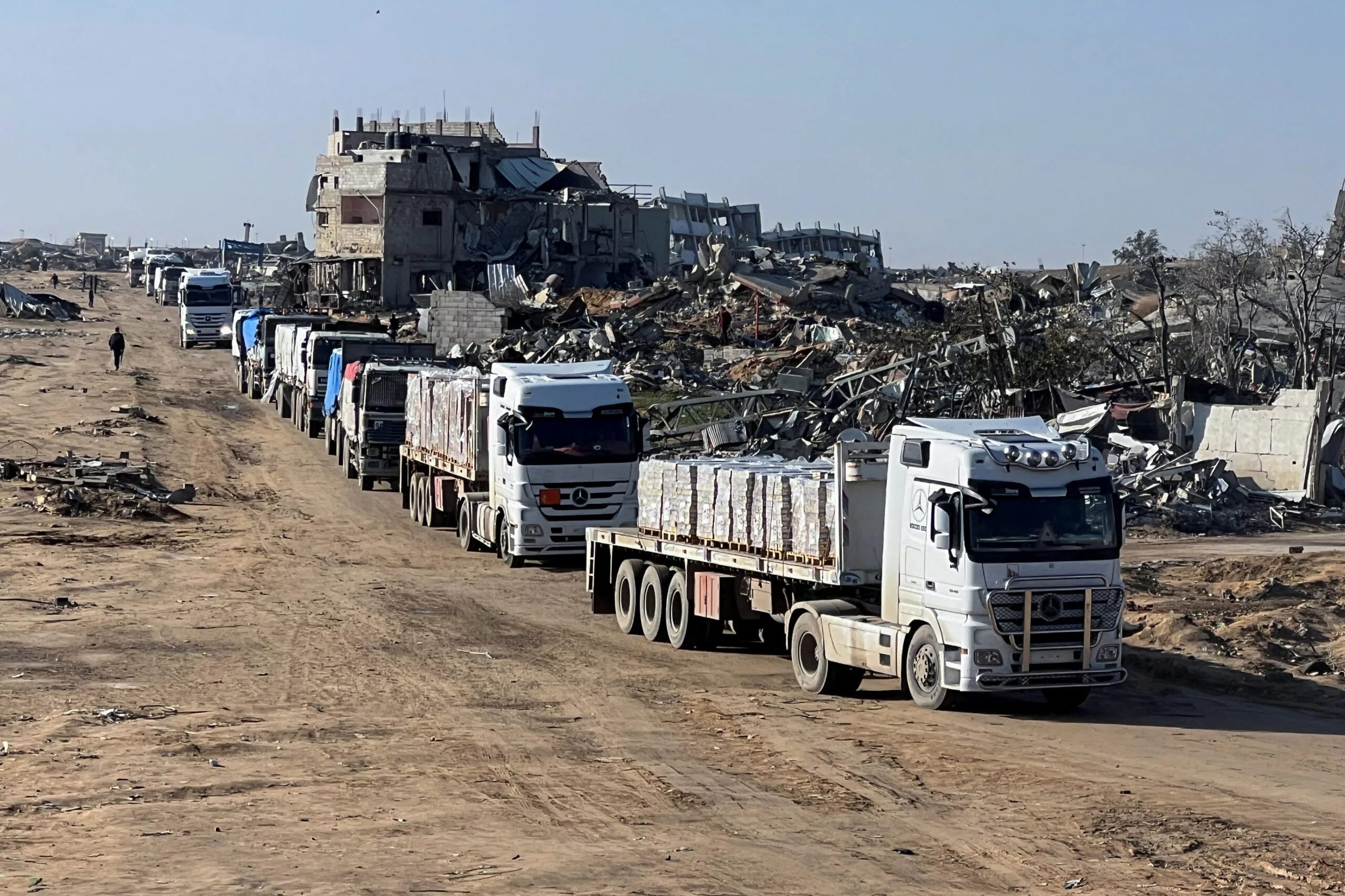
Throughout and after the war, Israeli propaganda worked aggressively to push a narrative that “Gaza is now thriving.” Claims that markets are bustling, shelves are full, and people are lining up outside restaurants were promoted extensively through media outlets, political platforms, and thousands of coordinated online accounts. Even top Israeli officials echoed these assertions.
More dangerously, this narrative was bolstered by a flood of photos and videos taken by residents or activists inside Gaza images showing malls or shops with very limited goods.
Whether intentional or not, these visuals created a false impression that life had returned to normal. In reality, such scenes reflect only a tiny fraction of the truth. Most of the available goods are imported in small quantities, unaffordable to 95% of the population, and are by no means representative.
The food that the Israeli blockade permits to enter is largely carbohydrate-heavy items that fill bellies quickly but lack the essential nutrients that starving people urgently need, such as proteins.
Meanwhile, the world is turning a blind eye to the lines of hundreds of thousands standing for hours at soup kitchens, water points, bakeries, and field clinics. The volume of media coverage of these scenes has dropped significantly.
Little attention is paid to the fact that Gaza remains one of the most densely populated areas on Earth west of the Yellow Line, under extreme conditions, with no functioning infrastructure, no stable electricity, no clean water, and no employment opportunities.
This dire situation places a tremendous moral, religious, and legal responsibility on every initiative leader, donor, volunteer, and charity. Aid reaching Gaza is at its lowest levels ever meaning every single dollar counts more than ever.
It is imperative that those handling donations act with the highest levels of transparency and integrity. These humanitarian efforts must not be exploited for personal gain, as has unfortunately occurred in isolated instances.
It is deeply troubling that some organizations have lost donor trust due to irresponsible conduct particularly at a time when trust is critical to ensuring the continued flow of aid. Recent reports should serve as a wake-up call for all stakeholders: the road ahead requires absolute integrity and professional management of relief funds.
If this situation is not actively countered in the media, disaster will befall those already devastated. There is a pressing responsibility on journalists, activists, and influencers — both inside and outside Gaza to continue sharing authentic images of suffering. The goal is not to elicit pity, but to present a complete and honest picture to global public opinion.
People outside Gaza only see what is broadcast to them. In the absence of accurate imagery, the Israeli narrative is left to dominate. It must be made clear that the silence of the guns does not mean the disaster has ended. The Israeli blockade continues to prevent the entry of essential items from nutritious food and shelter supplies to civil defense equipment, medical devices, and building materials.
Ongoing media coverage of the on-the-ground reality is not just a humanitarian and political necessity it’s a lifeline. Not only to save lives, but also to safeguard global consciousness from manipulation.
For the people of Gaza who once lived in warm, secure homes, enjoyed the fruits of their land, and lived with dignity it is a painful blow to feel abandoned by their own during their time of suffering, just as they were abandoned or left unaided during the war itself. Yet hope remains, and there is still time to reverse course.
This is an open call for the Arab and Muslim world and all those who value justice to reclaim their role in aiding Gaza, to offset the drop in international support, and to repay the debt owed to a people who have long been a symbol of steadfastness and sacrifice. This call begins first with the Palestinian people inside Gaza, the West Bank, and abroad and extends to all those of conscience everywhere.