

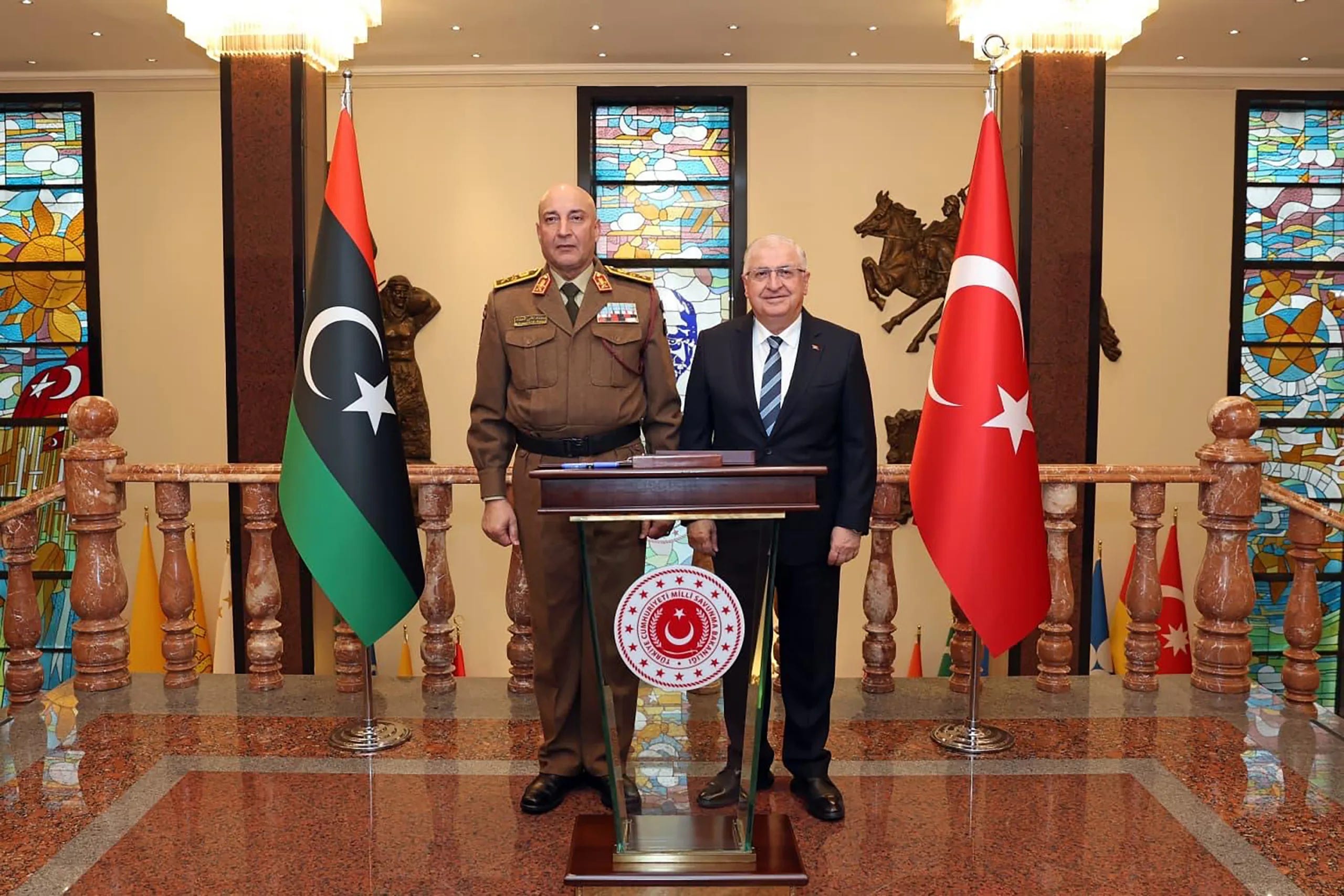
The Turkish Parliament has extended the mandate for its military forces in Libya for another two years starting January 2, 2026. The decision is based on a presidential memorandum reaffirming Ankara’s continued support for Libya’s internationally recognized government, its commitment to maintaining the ceasefire, preventing renewed chaos, and safeguarding Turkish interests in the Eastern Mediterranean and North Africa while pledging to uphold international law.
This move underscores Ankara’s determination to maintain its military and political presence in Libya amid a complex regional and global landscape. But what motivates Turkey to extend its presence? What objectives is it pursuing? And how might this step affect the balance of power in Libya and the region?
Background of Turkey’s Military Involvement
Turkey’s military presence in Libya began in late 2019 after the former Government of National Accord (GNA), led by Fayez al-Sarraj, signed a security and military cooperation memorandum with Ankara. This was followed by a maritime boundary demarcation agreement.
These accords formed the legal basis for Turkey’s involvement. In early January 2020, the Turkish Parliament approved an official mandate allowing the deployment of troops and military advisors to Libya, at the request of the Tripoli government and under Article 92 of the Turkish Constitution.
The mandate was swiftly implemented on the ground through the deployment of advisors, support units, and advanced military equipment, tipping the balance of the conflict particularly during the Tripoli battle between the GNA forces and eastern forces led by Khalifa Haftar from 2019 to 2020.
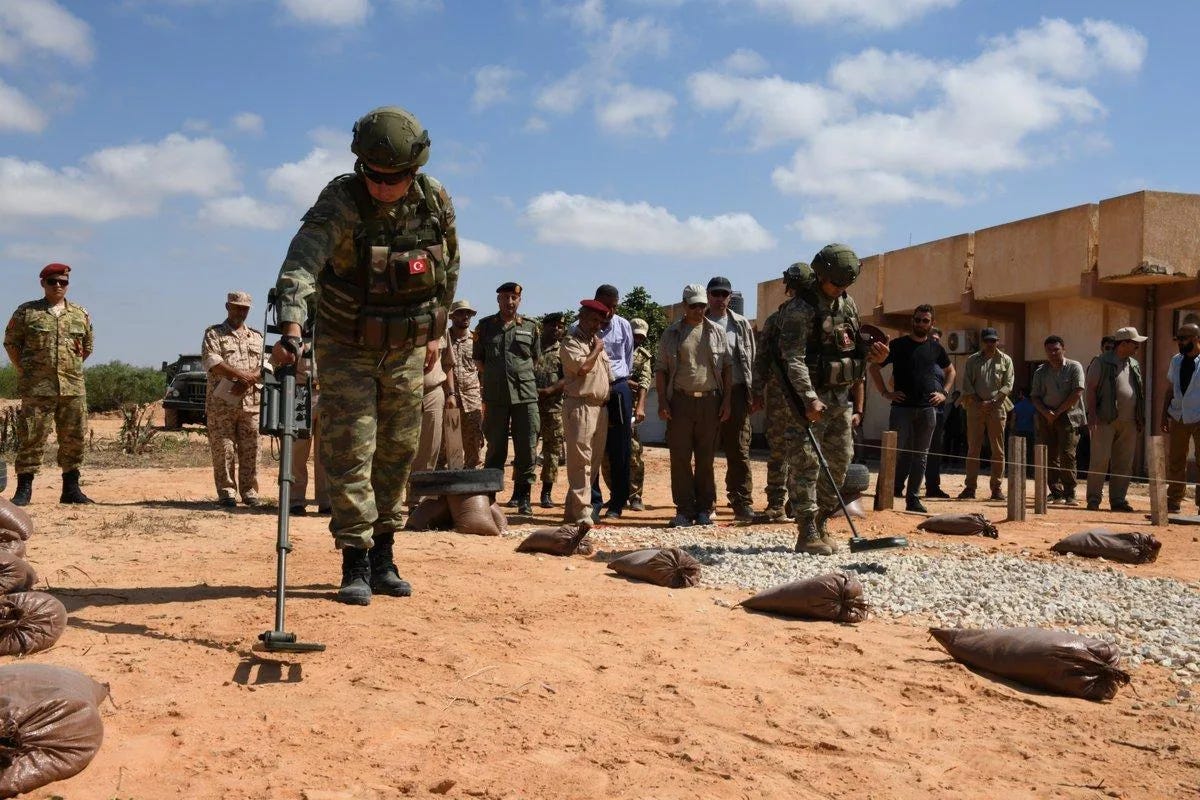
Turkey’s intervention was instrumental in repelling the assault on the capital and in helping western forces retake key positions, most notably al-Watiya Airbase in May 2020. This shift paved the way for a UN-brokered nationwide ceasefire in October of that year, marking the start of a new political process.
Since then, Turkey has maintained a measured military presence and continued coordination with authorities in Tripoli. After the formation of the Government of National Unity led by Abdul Hamid Dbeibah in March 2021, Ankara strengthened its political and military support, sustaining its partnership with the internationally recognized government despite ongoing political fragmentation and the failure to hold national elections by the end of 2021.
This cooperation has produced new memorandums of understanding, the latest of which was signed in March 2024 between the Turkish defense minister and Dbeibah, reaffirming the original agreements as the foundation of bilateral defense cooperation.
Amid persistent tensions, Turkey has repeatedly renewed its parliamentary mandate: first for 18 months in June 2021, then for two more years in November 2023, and most recently through the current extension effective January 2026.
Ankara sees its presence as vital to upholding the ceasefire, supporting the political dialogue, and preventing the collapse of Libya’s fragile stability while also safeguarding its strategic interests in the Eastern Mediterranean and North Africa.
Turkey insists its deployment in Libya is based on an official request from a legitimate government and rooted in publicly declared bilateral agreements consistent with international law. This, Ankara argues, distinguishes its forces from foreign occupiers and reinforces its claim that the intervention serves Libyan sovereignty rather than undermining it.
Strategic and Security Objectives
Turkey justifies its ongoing military presence in Libya with a mix of interwoven security and political rationales, framed as protecting national interests within the bounds of international law. Ankara considers its forces a forward defensive line against potential threats from irregular armed groups, helping to prevent Libya from sliding back into chaos an outcome that could trigger renewed migration waves or the resurgence of terrorist groups.
Both scenarios are seen as direct threats to Turkish national security and regional stability in the Eastern Mediterranean.
The latest presidential memorandum submitted to the Turkish Parliament emphasized that stabilizing Libya has become integral to Turkey’s national security doctrine. It warned that ongoing political divisions and stalled elections threaten the relative calm achieved since the ceasefire agreement.
The memorandum also reaffirmed Turkey’s commitment to supporting UN efforts for national reconciliation and comprehensive elections, asserting that preventing a resurgence of violence is essential for these initiatives to succeed.
In parallel, Ankara stresses its respect for Libyan sovereignty and territorial integrity and continues to provide training and technical support to Libyan forces in Tripoli based on the bilateral security agreement. This reflects a broader effort to help build a unified national army capable of maintaining stability and confronting emerging threats.
Yet Turkey’s security calculus goes beyond immediate threats. According to observers, its role in Libya has evolved from a tactical intervention into a long-term strategic posture. Turkish support for the Libyan government altered the military balance on the ground and cemented Ankara’s role as a key actor in any future settlement.
This approach aligns with broader geopolitical objectives particularly concerning energy politics and regional influence in the Eastern Mediterranean. Libya’s strategic location and resource potential make it a vital asset in the region’s maritime power dynamics.
Turkey’s presence there provides leverage and bolsters its negotiating position on contentious issues such as maritime boundaries and access to offshore energy reserves.
In this light, Ankara views Libya as integral to its broader East Mediterranean strategy. Its presence is not temporary but a cornerstone of regional influence that affirms Turkey’s status as a pivotal player in shaping the future of the area.
Moreover, Ankara sees its partnership with Tripoli as essential for safeguarding past gains most notably the 2019 maritime demarcation agreement, which Turkey considers a strategic achievement. Continued support ensures these agreements remain in effect and blocks the possibility of rival deals that could threaten Turkish interests in the Mediterranean.
Gains and Risks
Nearly five years into its military intervention, Turkey finds itself balancing the strategic dividends of its involvement in Libya against a growing set of challenges and risks. While some view this presence as a geopolitical asset, others warn of its potential costs. Turkey’s experience in Libya presents a complex picture of influence weighed against burden.
Strategic Gains
Regional Influence: Turkey’s military footprint in North Africa has provided it with a valuable platform to project regional power, particularly on sensitive issues such as security, stability, and energy. Through its security partnership with Tripoli, Ankara has become an indispensable player in Libya’s political and economic future.
The presence underpinned by legal agreements has extended Turkish influence well beyond military engagement.
Maritime and Energy Interests: Libya is central to the regional contest over maritime boundaries and energy exploration in the Eastern Mediterranean. The 2019 agreement with the GNA granted Turkey legal and geopolitical leverage in the face of rival blocs including Egypt, Greece, and Cyprus. Sustaining a military presence helps preserve that agreement and prevents its reversal through potential rival deals in Turkey’s absence.
Security and Intelligence: Turkey’s position in Libya enhances its intelligence capabilities, allowing it to monitor extremist groups and smuggling networks across Libya and the Sahel. It also enables Turkey to cultivate a local security partner through military training efforts, reducing cross-border threats and reinforcing its counterterrorism agenda.
Economic Prospects: Ankara is betting on future reconstruction opportunities in Libya, which are expected to accelerate once political stability is restored. These opportunities could benefit Turkish firms in infrastructure, energy, and construction especially in oil and electricity sectors thanks to the strong political and security ties with Tripoli.
Key Risks and Challenges
Military and Political Overextension: Even a seemingly calculated foreign deployment carries risks. Renewed fighting could embroil Turkish troops in a costly conflict with potential losses and political fallout. Any military setbacks could become a domestic liability for the government.
Diplomatic Strain: Turkey’s continued military presence may exacerbate tensions with European powers such as France and Greece, who see it as destabilizing. Moreover, its presence contradicts UN calls for the withdrawal of foreign forces, potentially exposing Ankara to diplomatic criticism or countermeasures especially if US or EU policies shift.
Reversal of Gains if Withdrawn Abruptly: Ironically, one of the greatest risks lies in an unplanned Turkish exit. A hasty or disorganized withdrawal could unravel the 2019 maritime deal and open the door for adversaries to forge new agreements that sideline Ankara in key energy and security dynamics in the Mediterranean.
In sum, Turkey’s latest extension of its military mandate in Libya is less a tactical move than a reaffirmation of a long-term strategic posture. Ankara sees this presence as an investment in regional influence more than a simple military deployment.
However, the success of this strategy depends on two critical factors: Turkey’s ability to avoid drawn-out entanglement, and Libya’s ability to achieve a political settlement. Between influence and burden, Libya remains a key proving ground for Turkish foreign policy in the Eastern Mediterranean.
