

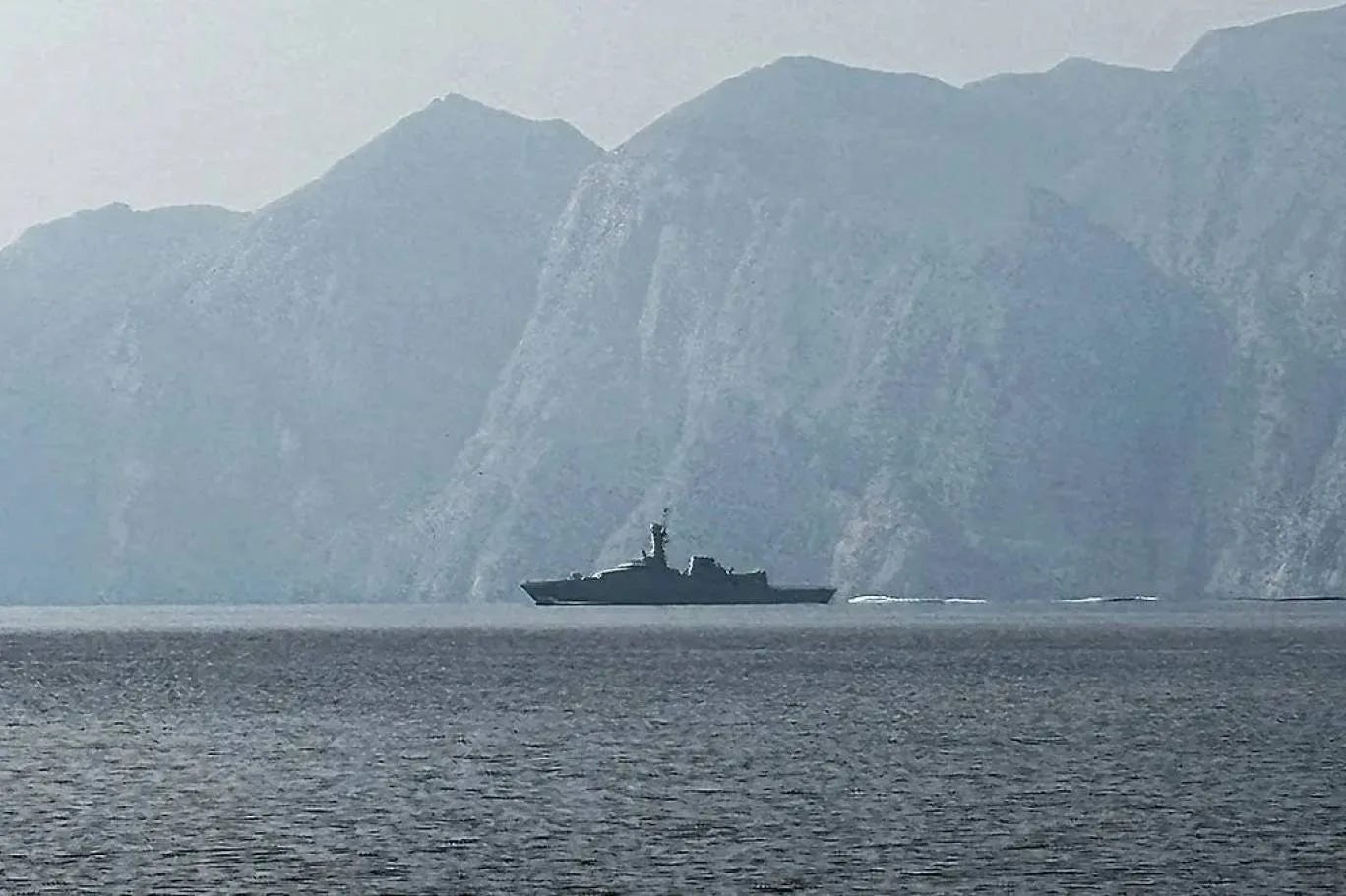
The Strait of Hormuz topped the agenda of the meeting that brought together the foreign ministers of Turkey, Egypt, Pakistan, and Saudi Arabia in Pakistan’s capital, Islamabad, on Sunday, March 29. This reflects the centrality of this vital passage in any prospective regional arrangements aimed at containing the war and mitigating its repercussions.
During the meeting, which included the foreign ministers of the four countries, a number of proposals were presented aimed at reopening the strait. These included the potential establishment of a consortium (alliance) to manage the passage, as well as discussions on imposing transit fees an apparent attempt to emulate the model of the Suez Canal.
According to Reuters, Turkey, Egypt, and Saudi Arabia are currently exploring the formation of a collective mechanism to manage oil flows through the strait, with Pakistan’s inclusion under consideration. The proposal has reportedly been discussed separately with both the United States and Iran and was referred to Washington prior to the start of these negotiations.
This proposal opens the door to a series of political, legal, and practical questions regarding its feasibility, the scale of potential obstacles, and the direct implications it could have on Iran’s regional influence. For decades, the Strait of Hormuz has been one of the cornerstones of that influence and a key strategic lever.
What distinguishes a strait from a canal?
There are fundamental structural and governing differences in the legal and administrative nature of the Suez Canal and the Strait of Hormuz that render any direct comparison between them imprecise from both a legal and political standpoint.
The Suez Canal is an artificial waterway located entirely within Egyptian sovereign territory and is directly administered by the Egyptian state. In contrast, the Strait of Hormuz is a natural international passage connecting open bodies of water and used for global navigation.
This distinction creates a fundamental difference in the legal framework governing transit and imposing restrictions, including fees, in each case.
Transit through the Suez Canal is regulated by the 1888 Constantinople Convention, which established the principle of keeping the canal open to international navigation, alongside regulatory systems set by the Suez Canal Authority, the Egyptian body responsible for managing this vital maritime artery.
Because the canal lies within Egypt’s territory and is subject to exclusive national administration, imposing transit fees constitutes a legitimate sovereign right. Cairo exercises this authority transparently through official schedules detailing fees, increases, discounts, and collection mechanisms.
By contrast, passage through the Strait of Hormuz is governed by the rules of international straits under the United Nations Convention on the Law of the Sea. These rules are fundamentally based on ensuring the right of ships and aircraft to continuous and expeditious transit passage, thereby limiting the ability of bordering states to obstruct or unilaterally reshape this right.
Accordingly, the authority of littoral states is confined to specific regulatory and technical domains such as navigation safety, traffic organization, and pollution prevention in coordination with user states. Legally, they do not possess the authority to transform the strait into a revenue-generating asset or impose transit fees akin to those applied in the Suez Canal.
Thus, any proposal to treat Hormuz as “another Suez” collides from the outset with a fundamental legal and sovereign distinction between the two waterways.
Can the two models be emulated?
The fundamental differences between the Strait of Hormuz and the Suez Canal legally and logistically do not preclude benefiting from certain aspects of the Suez model in managing the strait. However, they do impose clear limits on any attempt at full replication.
The issue is not about duplicating the Suez Canal model wholesale, but rather about selectively adapting some of its mechanisms within the legal constraints governing Hormuz.
In this context, it may be possible to adopt certain service-based fees such as charges for maritime pilotage, insurance, security escort, or traffic management without elevating them to the level of sovereign transit fees seen in the Suez Canal.
It is also conceivable to establish a joint operational mechanism based on cooperation between the strait’s littoral states—primarily Iran and Oman—and countries benefiting from the continued flow of navigation, alongside regional and international actors engaged in mediation efforts, such as the quartet of Turkey, Egypt, Saudi Arabia, and Pakistan, with potential varying levels of U.S. involvement.
Such a mechanism could regulate tanker flows and manage transit traffic without undermining the legal foundations governing the strait.
Additionally, a temporary transitional arrangement could be considered to ensure the strait’s operation until the war subsides and more durable agreements are reached. This could take the form of a technical-security framework focused on ensuring safe passage and securing vessels an approach broadly aligned with Turkey’s perspective of maritime security as a confidence-building measure paving the way toward a ceasefire.
What about Iran’s influence?
The Strait of Hormuz represents one of the most solid pillars of Iran’s influence. In Tehran’s strategic mindset, it is an extremely sensitive red line, and any attempt to undermine or reengineer its role without Iranian consent is unlikely to be tolerated.
Any engagement with this passage—under any framework—effectively means approaching one of Iran’s most significant geopolitical pressure tools in regional and global dynamics.
Iran’s influence over Hormuz is not derived from geography alone, despite its importance, but also from Tehran’s ability to leverage the strait as a deterrence and pressure instrument.
This keeps the possibility of disruption, threat, or increased transit costs ever-present in the calculations of major powers and global markets whenever Iran faces direct threats or attempts to strip it of its strategic assets.
Nevertheless, Tehran may show a degree of flexibility toward certain proposals for regulating navigation in the strait if it perceives them as serving a broader objective namely ending the war and alleviating U.S. pressure.
In this context, Iran may be open to joint technical or administrative arrangements, provided they do not evolve into mechanisms that diminish its role or circumvent its deeply rooted influence. This position is grounded in an unavoidable geopolitical reality: by virtue of geography, Iran will remain the most influential actor in the Hormuz equation.
The strait runs along its coastline and near highly sensitive Iranian islands and positions, making any management or restructuring plan unviable without Iranian approval or at least an understanding that reduces incentives for rejection or confrontation.
Thus, Iran may accept arrangements related to navigation safety and transit security, possibly in partnership with regional actors it considers credible, in exchange for recognition of its central role and clear sovereign guarantees. However, any framework perceived in Tehran as an attempt to internationalize the strait in a way that strips it of its strategic function is likely to face strong rejection.
Internationalizing straits: a future headline issue?
The disruption to global energy markets and supply chains caused by tensions in the Strait of Hormuz will likely push major powers chiefly the United States to explore new frameworks for securing maritime chokepoints in the Middle East, preventing similar crises that threaten global trade and energy flows.
In this context, the notion of “internationalization” may emerge as a topic of discussion. However, this approach faces significant obstacles, foremost among them its direct clash with national sovereignty and the geopolitical complexities governing these waterways. As such, full legal and sovereign internationalization remains highly difficult, if not unlikely, in the foreseeable future.
That said, a less confrontational and more viable alternative may arise in the form of “functional internationalization.” This would preserve state sovereignty while establishing multilateral frameworks to manage aspects such as navigation safety, insurance, monitoring, and technical and logistical support ensuring these waterways remain open to global transit while reducing the risk of their use as tools of coercion or geopolitical bottlenecks.
Ultimately, in this exceptional moment where disorder intersects with global uncertainty and the effectiveness of legal principles recedes before the logic of power and conflict reliance on law alone as a sufficient safeguard appears increasingly idealistic.
All scenarios remain open and subject to consideration, as developments are no longer confined to the Strait of Hormuz or Middle Eastern waterways alone. They now directly affect the shape and evolution of regional and international balances of power.
The aftermath of this war will likely extend beyond influence maps, trade routes, and energy security, potentially redefining the very rules of engagement themselves making it difficult to imagine that the world after this confrontation will resemble what it was before.
